

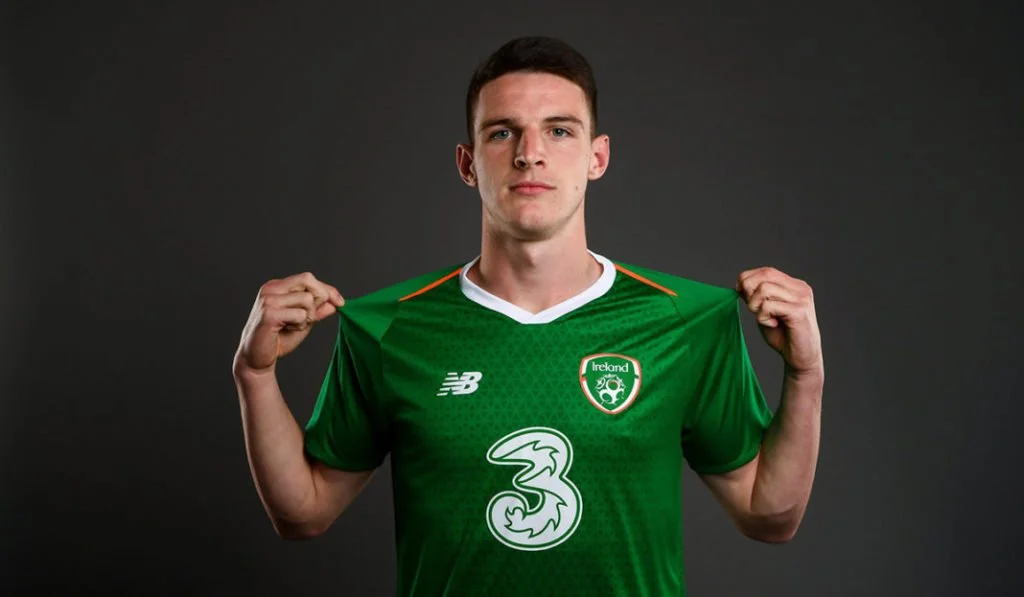
Is he Irish enough? The Great Divide over “The Granny Rule”
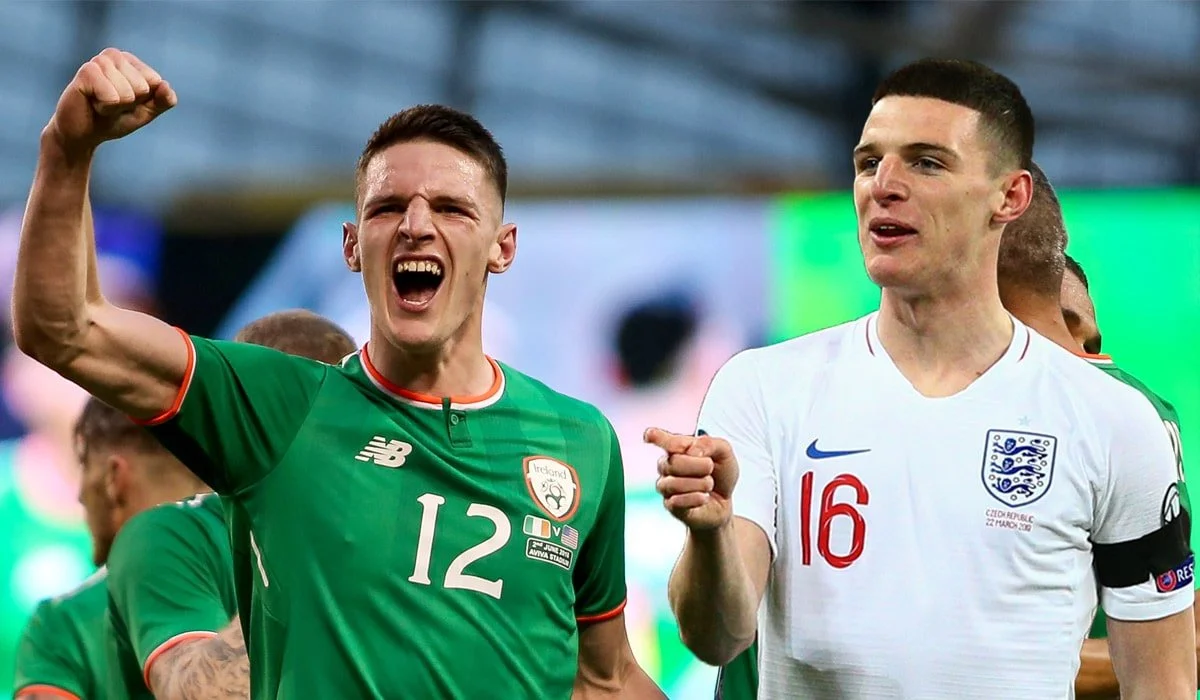
Credit - Extra.ie
While the Irish outfit stood together in Prague, they would undergo 120-plus minutes leading to heartbreak. Irish people sat watching in anticipation, but were met with a familiar and increasingly topical sight.
As Amhran na bhFiann rang out, some players were noticeably unfamiliar with the anthem. Jack Charlton utilised the “Granny Rule” and brought together perhaps the most beloved Irish team of all time, yet now we meet the same arguments.
As a commitment is announced, one side meets it with a groan, and some meet it with excitement. But how does the Irish public decide who is an Irishman?
What is “The Granny Rule?”
Colloquially referred to as the Granny rule in Ireland, the ability for first and second-generation emigrants with Irish descent to declare and make themselves eligible for Ireland. Considering the vast amount of Irish Diaspora across the globe, with the Irish culture of emigration. This would give Ireland a significant boost in eligible players
The Jack Charlton Revolution
Upon appointment to assume the helm of a nation that had never qualified for a major tournament, Jack Charlton quickly assessed the squad and arrived at a conclusion. He was set to specifically target and harness the granny rule.
Charlton, in 1986, scouted the UK aggressively for Irish-eligible players. Soon, he would convince some players to commit who would go on to become legends in Irish football.
Among the pantheon of greats for Ireland are John Aldridge, Ray Houghton and Andy Townsend, among many others. Houghton, especially, is still remembered for his iconic goal against England in the Euros, whilst still providing match commentary for RTÉ, including his iconic animalistic scream when Parrott sent Ireland to the playoffs.
Here comes the contradiction, however, as the nostalgia of Italia 90’ alongside the sixth place ranking in the FIFA national team table, many do not mention the presence of players who had to be reached out to for commitment. Does this dictate that the response for the Granny Rule only matters when we do well?
Heartbreak stemmed from prospects
After a fairy tale in Euro 2016 in France, Ireland would begin to sharply decline as the lack of funding in infrastructure would begin to finally catch up. The O’Neill – Kenny era would feature some notable examples of failed Granny Rule players.
Notably, Declan Rice and Jack Grealish would famously trade the Green for the White. Both still remembered to this day where a Nations League match demonstrated the Irish’s ability to hold a grudge when the pair were met with boos and jeers.
It was perhaps these two instances where extremely promising players treated Ireland like a development team or a back-up plan. The heartbreak from the pair leaving alongside the realisation that they had “taken” caps from other Irish men has led to the growing scepticism and discussion on the topic.
Furthermore, despite Rice posting Instagram comments that included “Tiocfaidh or la”, he still left the setup. This inherently makes it necessary to consider what connections these players have to Ireland beyond familial ties.
Overall, this is where it can be understandable for Irish fans to have become jaded about the Granny Rule. It should not be unreasonable to call for more Irish players born in the likes of Mayo to Mountjoy.
However…
With a continued issue of football in Ireland, as it is set to compete with GAA, Rugby and many other sports. Coupled with the issue of the mismanagement of funds from FAI under Delaney in the 90’s and 2000’s, Ireland in the meantime, needs the diaspora.
Drawing these players in to play for Ireland to effectively bridge the gap between mostly reliance on Granny Rule to a healthy balance would be necessary. As we see more exciting youngsters who are proud to be Irish, such as the newly called-up Jaden Umeh, Ireland still has a huge gap in age between established players and the new generation.
I would argue on this basis, firstly, that we must utilise and harness this rule. Plugging gaps in the squad while allowing the new generation to learn under the tutelage of the players who may have come from better academies could provide immense experience.
However, another aspect becomes important to note. Does the inclusion of Irish emigrants reflect on the culture and identity of Ireland as a whole?
With a current 400,000 – 500,000 Irish emigrants living in the UK, and many more across the globe. Ireland is known for emigration from the days of the Great Hunger to the post-independence era.
But what is “Irishness”
The likes of Kevin Kilbane or Shane McGowan were men whom most Irish people wouldn’t think twice of as someone who is not culturally Irish. Which, overall, heralds the question of what determines Irishness?
Is it the connection to the culture, or is it as simple as an accent? Or realistically, is it just the case that it does not matter if we do well and qualify for a World Cup?
Depicting someone as Irish should really depend and only matter if they decide to put on the Green Shirt; it should not matter if they have a cockney, New York or Canadian accent.
Conclusively, the nature in which people claim to be Irish will always be responded to with our insular nature. One thing is for certain, however, with the culture of migration, colonial memory and division, Ireland has never and probably will never be able to a simple definition of “Irishness”
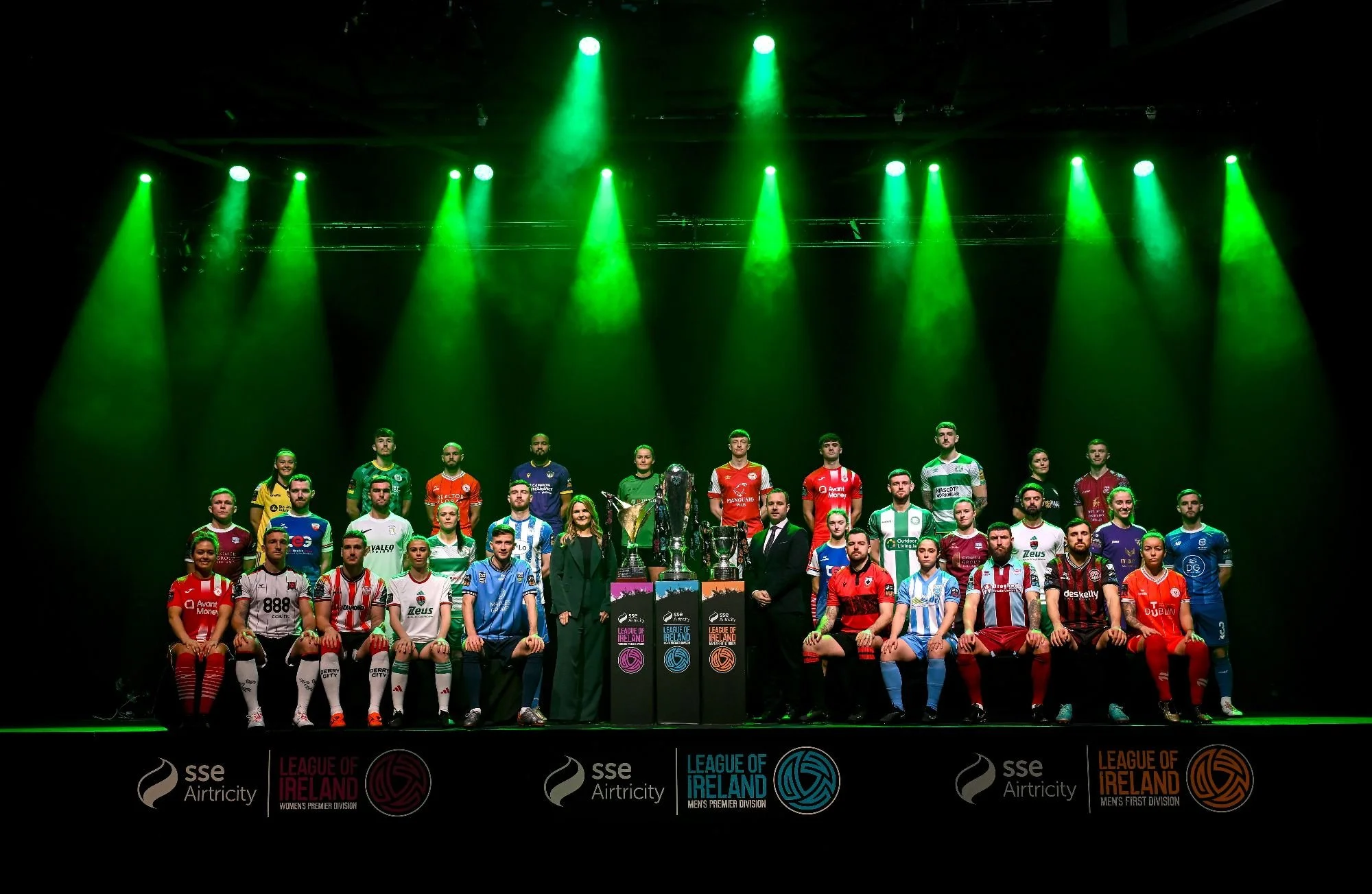
The League of Ireland: Irish Football fans finally look home
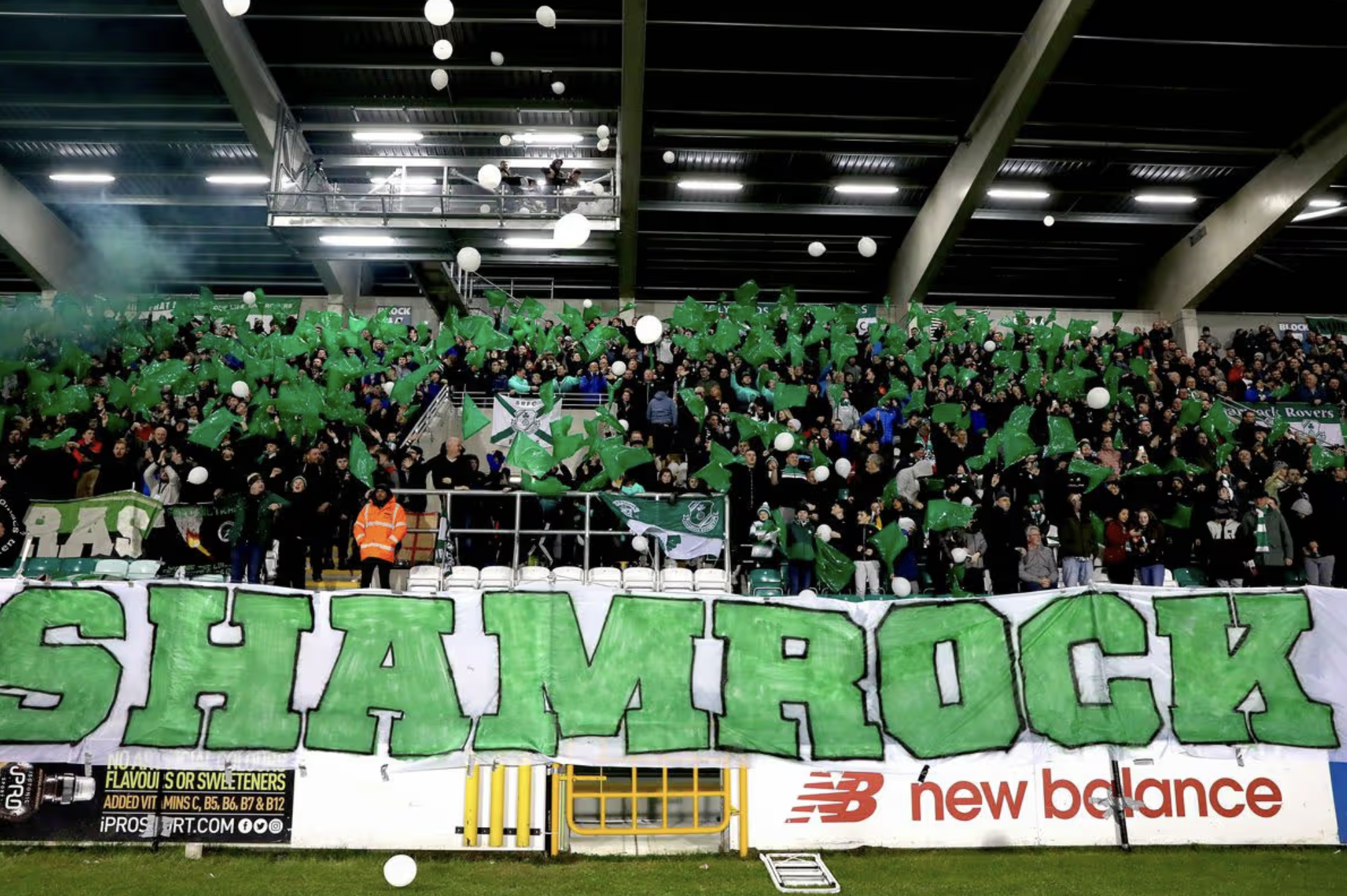
Credit - Irish Mirror
Ireland has seen a cultural revolution regarding music, language, and identity. A quieter transformation has taken place in the background. Once forgotten, now the League of Ireland experiences packed crowds, filled with young fans, fan culture, flags, and flares.
The once-forgotten league, where Irish fans across the country would sooner go into their local sports shop to purchase the red of Liverpool or Manchester United, has since begun to boom financially.
The League of Ireland has recently seen renewed and sustained interest. With record-breaking attendances at the landmark opening match of last season between Bohs and Shamrock Rovers.
Alongside, the improved performances of Irish teams in Europe have led to consistent qualification for the Conference League.
The League's financial improvements have coincided with increases in television viewership and attendance.
With this rise in mind, what are some of the root causes of the growth of the League of Ireland, and can it maintain its rise?
Fatigue of “the World’s Greatest League”
The Premier League is home to many clubs that Irish people have taken to over the years. For many Irish people, the Big Six see huge droves of fans and fan clubs alike across the Emerald Isle.
With the corporate nature of football, prices have grown exponentially. Not only have ticket prices risen for Irish hopefuls to partake in football tourism, but prices have also risen with subscription and TV prices.
Tickets have grown to unaffordable levels even for locals in the UK. For example, there has been an outcry over clubs outpricing their faithful fans over the last couple of years.
Key reminders of the visual protests from West Ham or Spurs with the black balloon protests immediately spring to mind.
Where the fans took to throwing black balloons on the pitch to protest the club’s attempt to remove concession prices for tickets.
While TV subscriptions have risen due to the number of games televised increasing. The average viewer would have to have Sky Sports, Prime and BT Sport to watch every possible game available on television.
Evaluating this and the current quality of the League, where the game has become hyper-fixated on set-pieces and controversy surrounding officiating and VAR has also contributed to the shift in interest in the country.
Culture and Community
Increased coverage of the League has demonstrated the fan culture that is available to prospective fans.
More televised games have illustrated the colourful flares, ultra-culture and fashion that the league has had to offer and thus, enticed viewers to experience match days.
Likewise, in the eyes of the general public, nothing is preferable to wearing a trendy jersey to a festival.
Excessive amounts of Bohemian jerseys have been worn and have even graced international celebrities such as Greta Thunberg.
Factors like these have aided the growth of the League, where the community aspect once experienced is helping to enable Irish fans to put away their English football kit and pick up a kit of a team from Letterkenny or Phibsborough.
Moreover, a huge criticism of fans not supporting their local situates itself in the community aspect.
Local fans are the first to scream and deplore “glory hunters”, where they ensure people that they cannot possibly enjoy football as much as they do due to not being in the locality and community.
While perhaps a bit exaggerated, it may have some truth. The average Irish fan is far more likely to find themselves relating to the history of a team close to them, while being able to work attending games into their schedule as a ritual.
This could depict why Irish fans are more likely than ever to proclaim their Irish team, where community is huge.
Think of the likes of the GAA, where I, a Laois man, wouldn’t dare claim to be a Dub in hopes of seeing an All-Ireland in my lifetime.
This logic, while slightly altered through the lens of football, could increase the interest in the League if more people were to adopt it.
Success at the European Level
As the clubs improve their performances in the European continental tournaments, this will only serve to enhance the chances of making new fans.
Fans are generally more likely to attend games if there is a chance to see a global football name on the pitch. Consider the Shelbourne and Crystal Palace.
The average Irishman was rarely able to get the chance to see a Premier League outfit with highly touted players compete in Drumcondra.
Now the average fan can get that chance. They get the chance to see Irish Teams compete at one of the premier competitions, which will only happen to boost interest in the League while increasing revenue if success continues at the rate over the last two years.
Can it be sustained?
The rise in interest in the league has resulted in a lucrative TV deal with Virgin and its own subscription model in LOI TV. However, it might not be time to call complete and total victory for the success of the League.
The infrastructure in the league remains extremely poor in comparison to countries of similar financial stature to Ireland. This can be noted with the poor quality of stadiums, too. Where this can likely result in teams looking to update their stadiums to align the quality of the stadium to modern standard risk the chance of eliminating what makes the league unique.
Finally, being beside the UK poses a threat, considering the poor wages on offer in the Republic, in contrast to the financial juggernauts of the Premier League. Young Irish talent bred in the Irish system has started to emerge as a growing trend.
Mason Melia, Jake O’Brien and Evan Ferguson are just a few names who, at a young age, decided to trade the League of Ireland for the world-class facilities and training of England. There is a further incentive for UK teams to deploy scouts to Ireland, where players are not required to get a work permit and can be counted as homegrown if they are at the club for three seasons and signed before 21.
These are some of the threats that the league faces. However, one thing is certain. Where once the stands of the League of Ireland saw empty seats and English jerseys, it now sees passionate fans and a growing culture in the heart of Ireland.
Ireland’s Identity Crisis: Ireland v Israel
Credit - Reuters
More Than a Sport
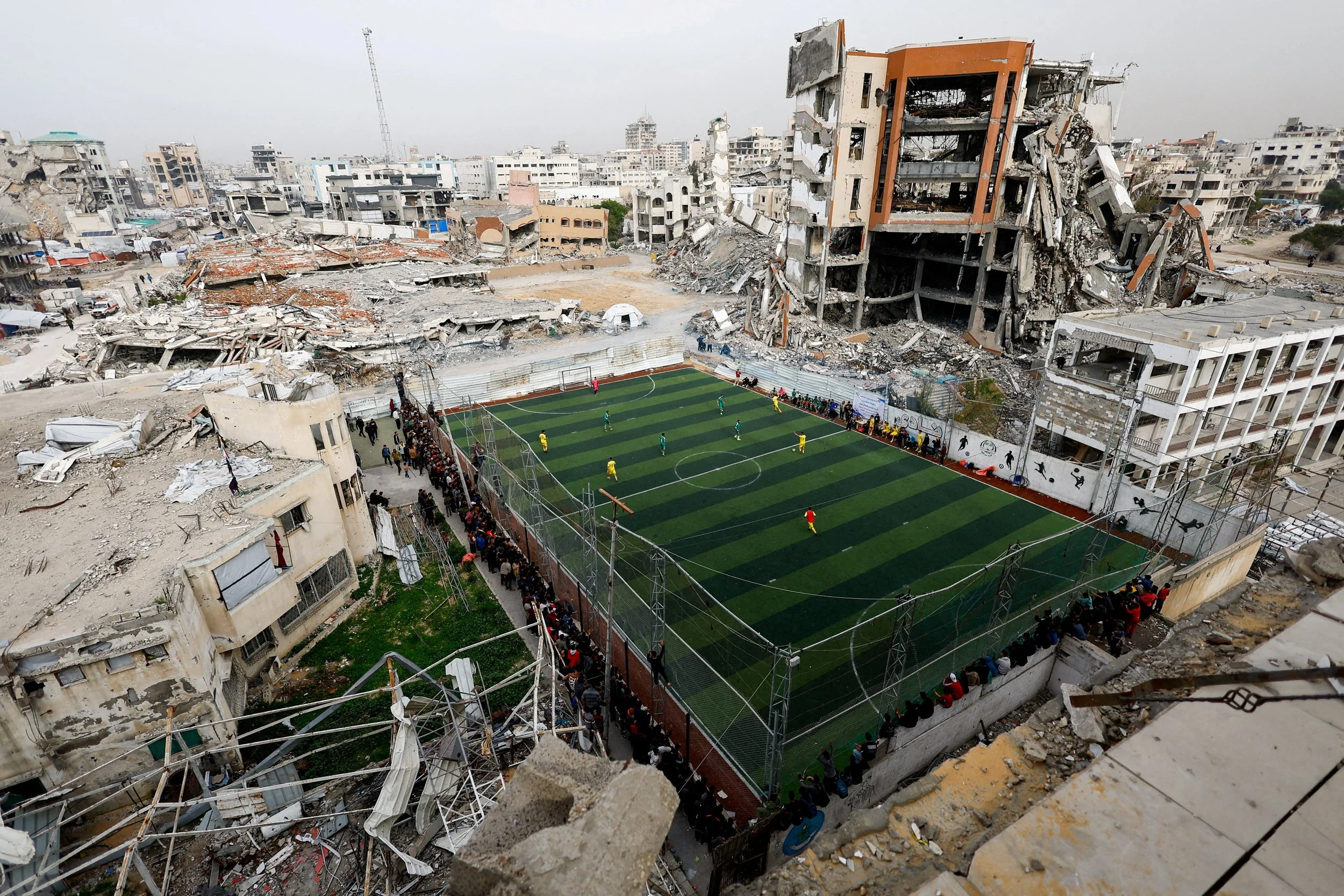
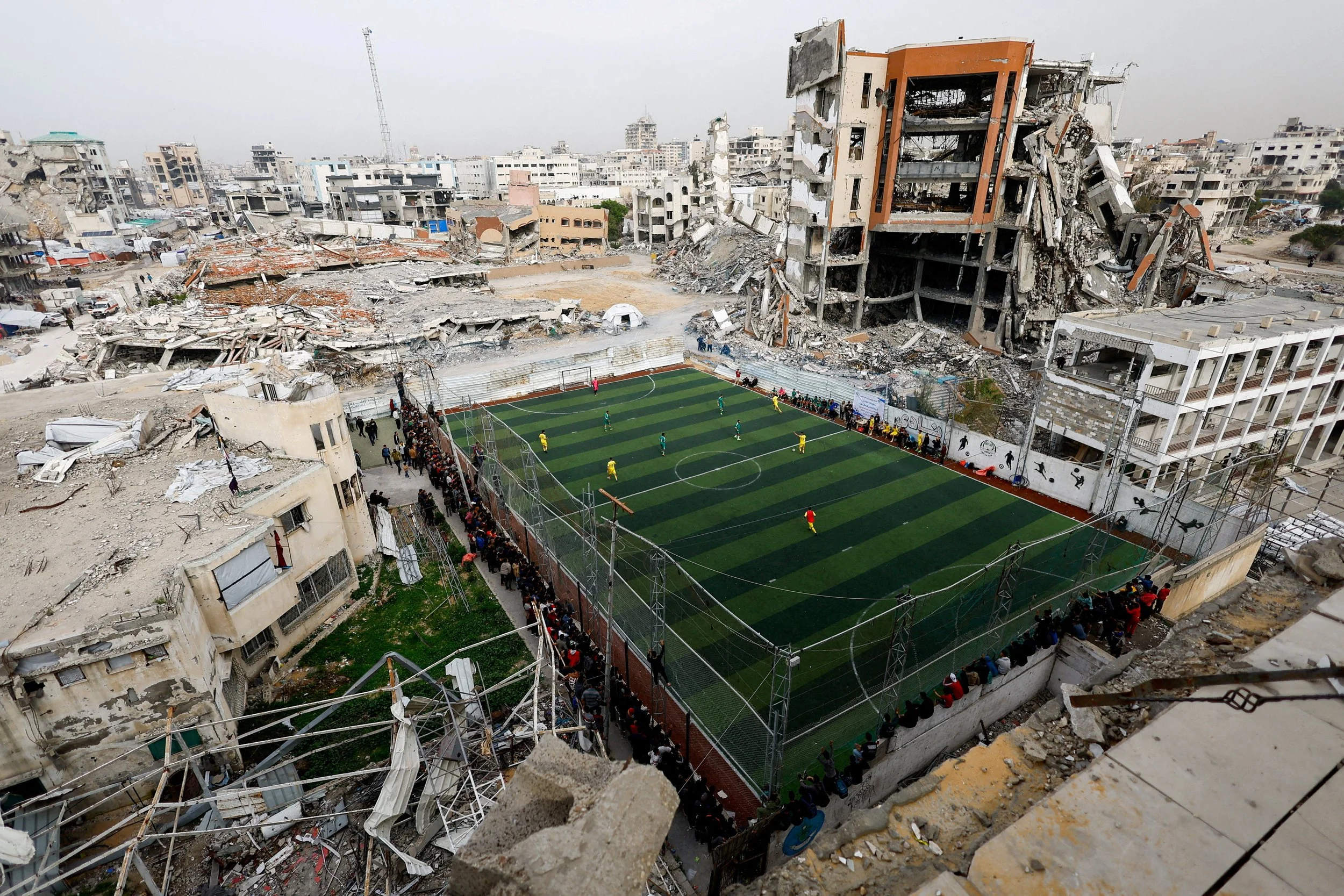
As the cries rang out, Ireland agonisingly failed to qualify for a Major Tournament for the fourth tournament in a row. An existential match began to come to the forefront for Ireland. Drawn against Israel, Ireland’s past of colonial struggle, independence, and parallels with Palestine were about to come head-to-head with the sporting realm.
On the Twelfth of February, Ireland was drawn into a Nations League group to play against Kosovo, Austria and crucially, Israel. Much had been made of the tumultuous relationship between Israel and Ireland. Immediately after the draw had concluded, the reaction was already fiery in response. Initial and quick calls for the National Team to decline to play the match commenced.
Consistently, whenever issues like this arise in football (or any sport for that matter), many clamour to “keep politics out of football”. In reality, this is much harder to do. Thus, it is undestandable to pose if it is possible to keep politics out of football
Whereas Israel has continued to play while it continues its ethnic cleansing of Gaza, other countries, such as Russia, have been banned from playing in continental tournaments, and similarly, their domestic teams have received the same treatment.
This is appropriate because consider if Russia and Ukraine played each other in a match. This can only display that it is not simply that, a match. It can become a cultural moment, or it can result in huge clashes.
While not on the same level as a Russia v Ukraine match or a match between Israel and Palestine themselves. The situation surrounding the Ireland and Israel game is massively important to understand.
Ireland and Israel Relations
Set in stone with the Balfour declaration in the UK in 1917, the Zionist project was set to go to Palestine and establish itself with the help of the UK. This is where the UK would redeploy the Black and Tans to “Mandatory Palestine”
This is just one of the obvious links as to why Ireland feels so strongly about the conflict as a whole. Further observations can be illustrated with the feeling of a cultural erasure of a homeland.
Ireland has similarly been one of the leaders in the Western world for the recognition of Palestine alongside Spain and Norway under the initial 1967 borders set before the ethnic cleansing of Palestinian land.
The Players and Match Base
Whether this match should go ahead beyond the historical significance of it should also consider the players, the fan base, and the general pr nightmare this match could potentially bring.
This match could certainly bring massive amounts of media spotlight with the scale of the tie, not on a competitive basis, but on a cultural one. The atmosphere at the Aviva will be tense should the fixture go ahead. This could lead to heightened clashes between the fans or the players on the pitch.
The players have been forced into an unwinnable fixture where the morality of the occasion will continuously be questioned, and the attendance could be stunningly low. Furthermore, there could be a flag policy put into action if Ireland were to get a considerable fine with Palestine flags flown from corner to corner.
Finally, if the match is to be played with huge boos to the Israeli anthem, the Israeli players and if a scuffle were to ensue on the pitch. Ireland has already unfairly gained the moniker as the “most antisemitic country in Europe” by Israeli officials, despite being one of the few to not have a state-sponsored persecution of Jewish people.
This match could provide evidence and depict Ireland in a bad light if it were to go ahead. Similarly, a player who potentially could play his first cap or his last cap could have his career marred with accusations of antisemitism. Realistically, the match in itself presents Ireland in a highly volatile situation where the actions on the pitch will not be the key discussion points.
Reactions
Considering the prospective animosity with the ongoing protests in Ireland and abroad, there has been an outcry among former professionals, too.
On the 7th of May, leading Irish footballers have sent an open letter labelled Stop the Game. Irish football personalities such as Brian Kerr and Irish women’s player Louise Quinn and Irish artists such as Kneecap and Fontaines D.C have taken to protest the match.
With pressure building, the FAI will have to determine whether playing the game will be worth it with all the noise surrounding the two ninety-minute affairs.
With 180 minutes of football to commence, a summer of noise and speculation will surround the game and the FAI will have to conclusively decide on the path it will take for the National Team. Will the game be played, or will it be the first step towards evaluating Israel’s place in UEFA.
Artificial Intelligence for Men, Artificial Negligence for Women: Missing Data in the World of Sport
Jack Whelan - 11th December 2025
Credit - FAI
Upon thinking of AI, your mind is brought to the likes of 2001: A Space Odyssey and Her, dystopian futuristic settings but this is our world now. However, the AI that has been a source of debate over the last two years is called Generative AI. Apps such as ChatGPT or DeepAI use these programs to scrape information from the internet and produces a human like content upon being prompted with a request.
Traditional AI is something we use every day. YouTube and Amazon use information from your previous searches and cultivates an algorithm of interests for everyone based on cookies you agree to when upon entering online domains. Traditional AI does not just reach the sectors of retail and entertainment however, as it has the power to revolutionise the world of sport. This has already begun as on YouTube you might have already been exposed to ads of a fitness company named WHOOP which can track sleep, track steps, monitor your stress levels to deliver a picture of what you need to attain to get the most out of your day.
This has been a huge benefit to the fitness fanatics, so it becomes immediately obvious that this would translate to the professional sporting realm. Sporting activities have sprouted into different sectors each with their own individual economies which has seen great advancements in the sporting realm occur over the past few years. Per The Sun, the Premier League champions Manchester City received a whopping £143 million pounds, rugby does not receive as much, with a lower global viewership and less lucrative tv deals.
Maximising an athlete’s performance is paramount to winning, with dedicated sectors of a club’s resources going towards sports science and performance trackers for first team and for academy teams. Upon asking an AI expert from AI Ireland and Alldus, Mark Kelly, he gave me a few insights into the benefit of this technology and why it is being used in the highest echelons of professional sports. Traditional AI has given the opportunity to provide tools that reduces injury risks and optimises training schedules. The introduction of AI into scouting systems has been a huge coup too showing trends in a player’s performance to uncover “Hidden Gems.”
However it is not always smooth as a controversial one for the footballing world is the dreaded VAR (Video Assisted Referees) which has seen a new AI technology, Semi-automated Offsides have recently been rolled out for the Champions League and some of the continental cups such as the World Cup Set to be introduced in the Premier League in the near future after a unanimous vote by the clubs in favour. The system will have AI be a key factor in the technology with tracking software alongside camera footage used to take away the human error in VAR.
Credit - EU Startups
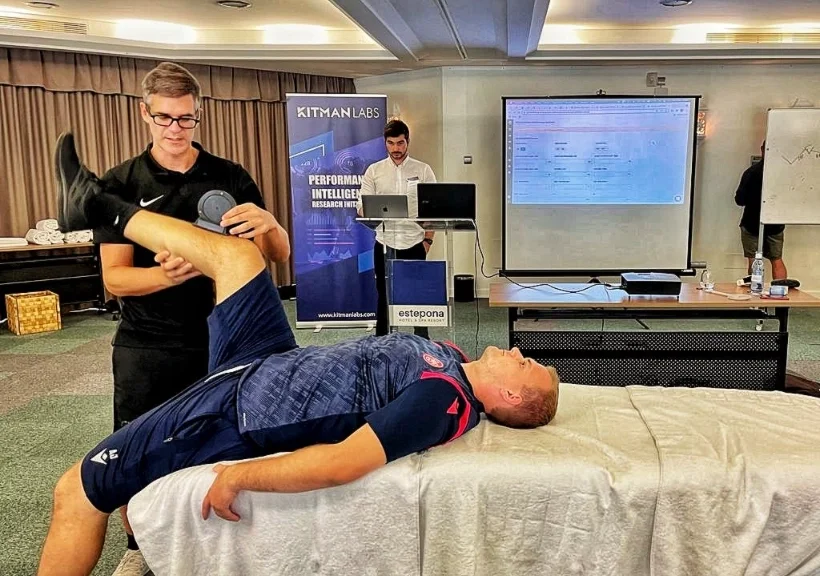
AI technology has obviously been an enormous success in the sporting realm. Kitman Labs, an Irish company has partnerships across the globe from the NFL to rugby. This will continue to expand further in the coming years with the prospects of, as Kelly predicts, “predictive analytics, hyper-personalised training and virtual reality-enhanced coaching”. However, there has been a blind spot that has emerged with sports and AI. Not necessarily the AI technology, but as he put it himself “without the data, the insights are useless”, and due to the lack of data in female sport, AI is not suitable for widespread use.
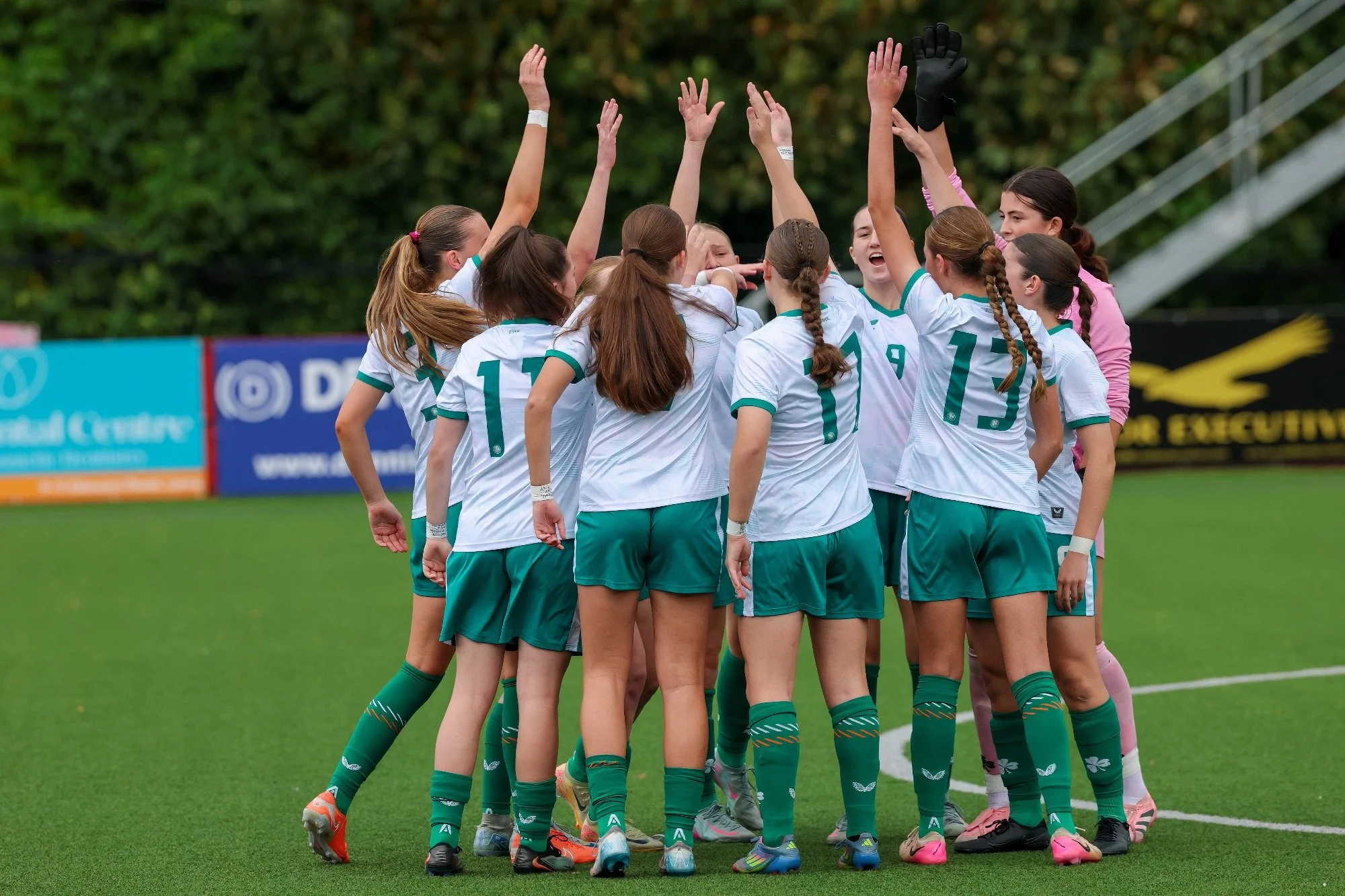
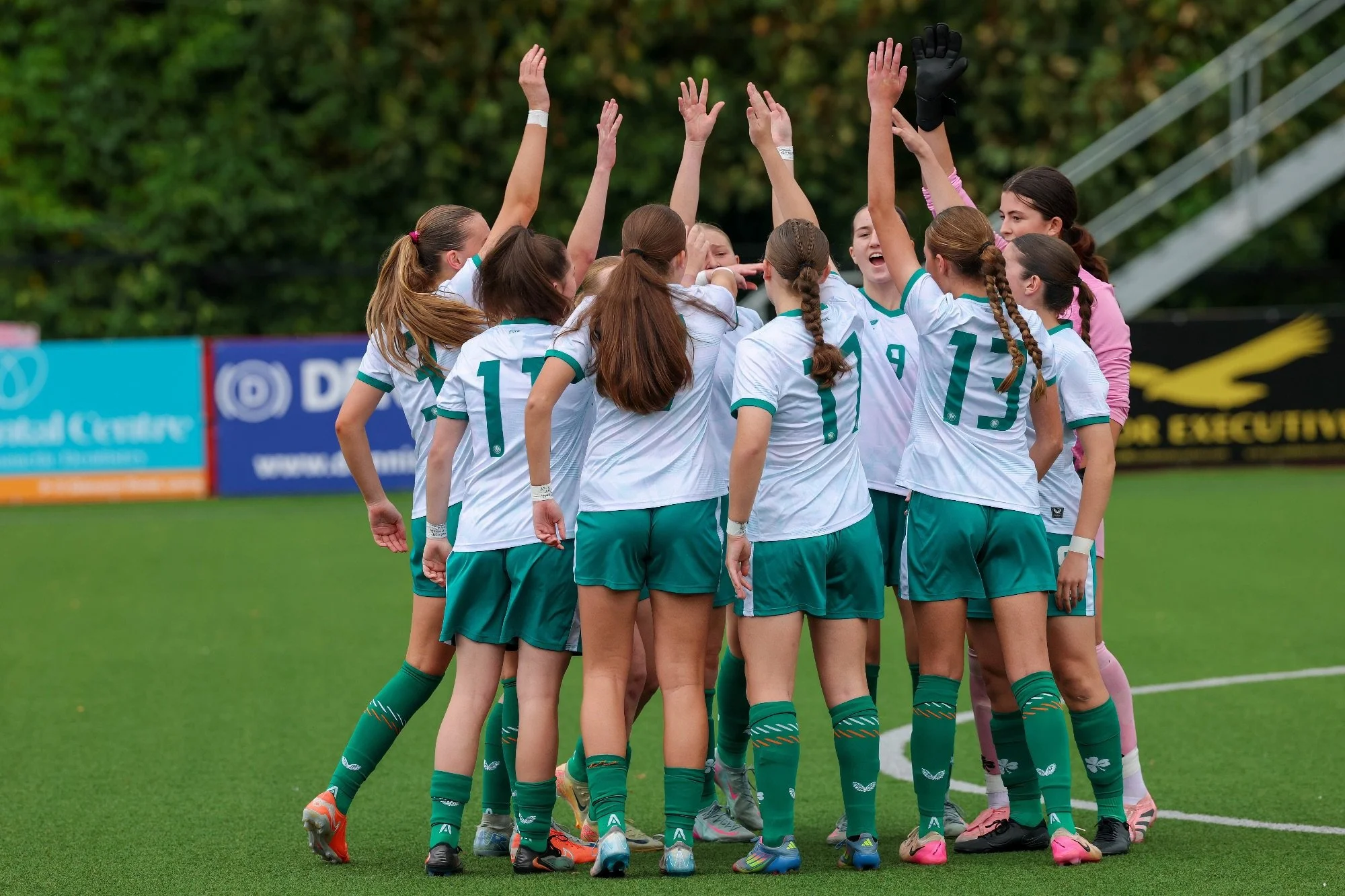
Why is there a scarcity in data in female sport? There has been an undeniable growth in interest in professional women’s sports with the likes of the WNBA receiving a huge viewership increase after the emergence of Caitlin Clark. Women’s football has also seen a dramatic increase as observed with the 42% average attendance growth at the most recent world cup in 2023. Luckily, Mark gave me some great insights into the challenges that Women’s sports face in the years to come.
The women’s game has a distinct lack of infrastructure, Kelly refers to “grassroots and underage receive less attention, funding and interest”, funding is one of the most dramatic differences between the two. The average wage per year of a female and male player is massive, women receive an average £47,000 pound a year, compared to an excess of £3m pounds (numbers recorded from year 2023). This is applicable to the data gathering for women too, with less money flowing in women’s sports, there is not the funding for trackers to gather the data necessary.
With the lack of funding comes an ugly undertone. Men’s sport receives far more attention on a societal level across all countries while female underage sports in general receive as Kelly lamented “less attention, funding and research interest”. There are less participants in sports for females in underage age-groups, which results in the data having a smaller sample size to base itself from. Men’sfootball has an array of different competitions in stark contrast to the women’s game which has far fewer organised tournaments, pair this with ‘inconsistent record-keeping’ and this has a direct consequence on data leading to fragmented datasets and inconsistent data.
Finally, the last two challenges are the biological variability with growth spurts and hormonal changes that “influence performance metrics, making it harder to create comparable datasets” and the final one is the lack of standardisation, with inconsistent collection methods across different regions and clubs preferring to rely on manual observations, with humans being a variable, this can lead to “bias rather than objective metrics like those provided by AI systems”.
So, what are the consequences of having gaps in data, that arise from the difficulties that face data collection in relation to female athletes? Data has a distinct disadvantage for women, with the clear and evident lack of resources, this has had an overwhelming effect on female athletes already. An article from Sky Sports investigated into the ‘ACL epidemic’ in women’s football where it is estimated that an astonishing 195 elite players suffered an ACL injury in the previous 18 months.
A doctor told Sky Sports that in relation to ACL injuries for women, they are “four-to-six times more at risk” in comparison than men. Thankfully there has been some steps taken to figure out why this is the case. UEFA, in December 2023, finally introduced an ‘expert panel’ to explore the issue and gain more of an overall understanding of it.
Even close to home, Kelly has raised these issues with the GAA and the IRFU. Simply put, without the resources put into data collection, the current data that we have and use, will lead to “misinformed strategies, ineffective training plans and missed opportunities to nurture talent.” The only way we will improve is investment and interest. As for now, with the top-classtechnology that is at our disposal, it is simply unacceptable for us to ignore these huge red flags that are waving in front of our eyes.