

Ireland’s Identity Crisis: Ireland v Israel
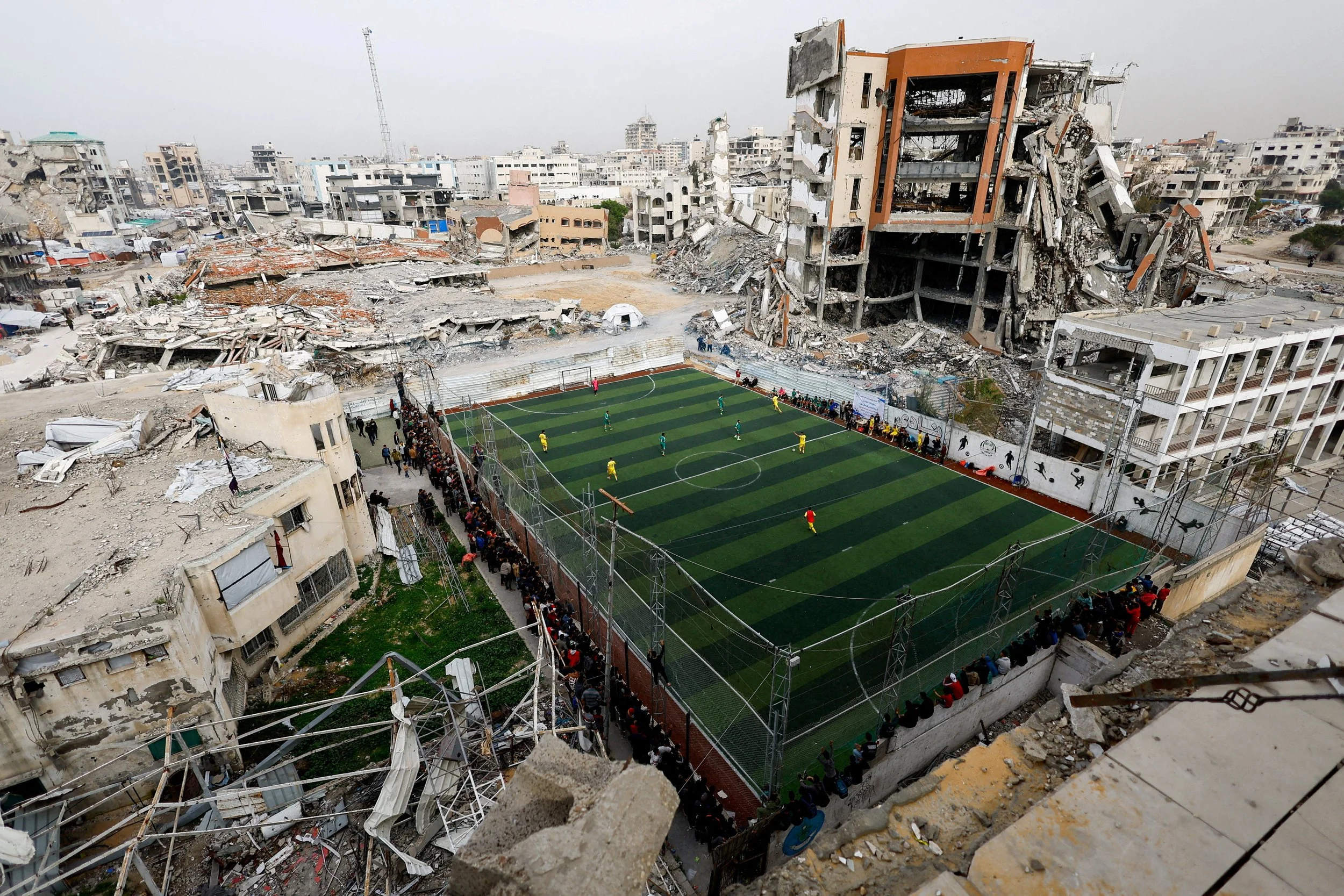
Credit - Reuters
More Than a Sport
As the cries rang out, Ireland agonisingly failed to qualify for a Major Tournament for the fourth tournament in a row. An existential match began to come to the forefront for Ireland. Drawn against Israel, Ireland’s past of colonial struggle, independence, and parallels with Palestine were about to come head-to-head with the sporting realm.
On the Twelfth of February, Ireland was drawn into a Nations League group to play against Kosovo, Austria and crucially, Israel. Much had been made of the tumultuous relationship between Israel and Ireland. Immediately after the draw had concluded, the reaction was already fiery in response. Initial and quick calls for the National Team to decline to play the match commenced.
Consistently, whenever issues like this arise in football (or any sport for that matter), many clamour to “keep politics out of football”. In reality, this is much harder to do. Thus, it is undestandable to pose if it is possible to keep politics out of football
Whereas Israel has continued to play while it continues its ethnic cleansing of Gaza, other countries, such as Russia, have been banned from playing in continental tournaments, and similarly, their domestic teams have received the same treatment.
This is appropriate because consider if Russia and Ukraine played each other in a match. This can only display that it is not simply that, a match. It can become a cultural moment, or it can result in huge clashes.
While not on the same level as a Russia v Ukraine match or a match between Israel and Palestine themselves. The situation surrounding the Ireland and Israel game is massively important to understand.
Ireland and Israel Relations
Set in stone with the Balfour declaration in the UK in 1917, the Zionist project was set to go to Palestine and establish itself with the help of the UK. This is where the UK would redeploy the Black and Tans to “Mandatory Palestine”
This is just one of the obvious links as to why Ireland feels so strongly about the conflict as a whole. Further observations can be illustrated with the feeling of a cultural erasure of a homeland.
Ireland has similarly been one of the leaders in the Western world for the recognition of Palestine alongside Spain and Norway under the initial 1967 borders set before the ethnic cleansing of Palestinian land.
The Players and Match Base
Whether this match should go ahead beyond the historical significance of it should also consider the players, the fan base, and the general pr nightmare this match could potentially bring.
This match could certainly bring massive amounts of media spotlight with the scale of the tie, not on a competitive basis, but on a cultural one. The atmosphere at the Aviva will be tense should the fixture go ahead. This could lead to heightened clashes between the fans or the players on the pitch.
The players have been forced into an unwinnable fixture where the morality of the occasion will continuously be questioned, and the attendance could be stunningly low. Furthermore, there could be a flag policy put into action if Ireland were to get a considerable fine with Palestine flags flown from corner to corner.
Finally, if the match is to be played with huge boos to the Israeli anthem, the Israeli players and if a scuffle were to ensue on the pitch. Ireland has already unfairly gained the moniker as the “most antisemitic country in Europe” by Israeli officials, despite being one of the few to not have a state-sponsored persecution of Jewish people.
This match could provide evidence and depict Ireland in a bad light if it were to go ahead. Similarly, a player who potentially could play his first cap or his last cap could have his career marred with accusations of antisemitism. Realistically, the match in itself presents Ireland in a highly volatile situation where the actions on the pitch will not be the key discussion points.
Reactions
Considering the prospective animosity with the ongoing protests in Ireland and abroad, there has been an outcry among former professionals, too.
On the 7th of May, leading Irish footballers have sent an open letter labelled Stop the Game. Irish football personalities such as Brian Kerr and Irish women’s player Louise Quinn and Irish artists such as Kneecap and Fontaines D.C have taken to protest the match.
With pressure building, the FAI will have to determine whether playing the game will be worth it with all the noise surrounding the two ninety-minute affairs.
With 180 minutes of football to commence, a summer of noise and speculation will surround the game and the FAI will have to conclusively decide on the path it will take for the National Team. Will the game be played, or will it be the first step towards evaluating Israel’s place in UEFA.
