

The League of Ireland: Irish Football fans finally look home
Credit - Irish Mirror
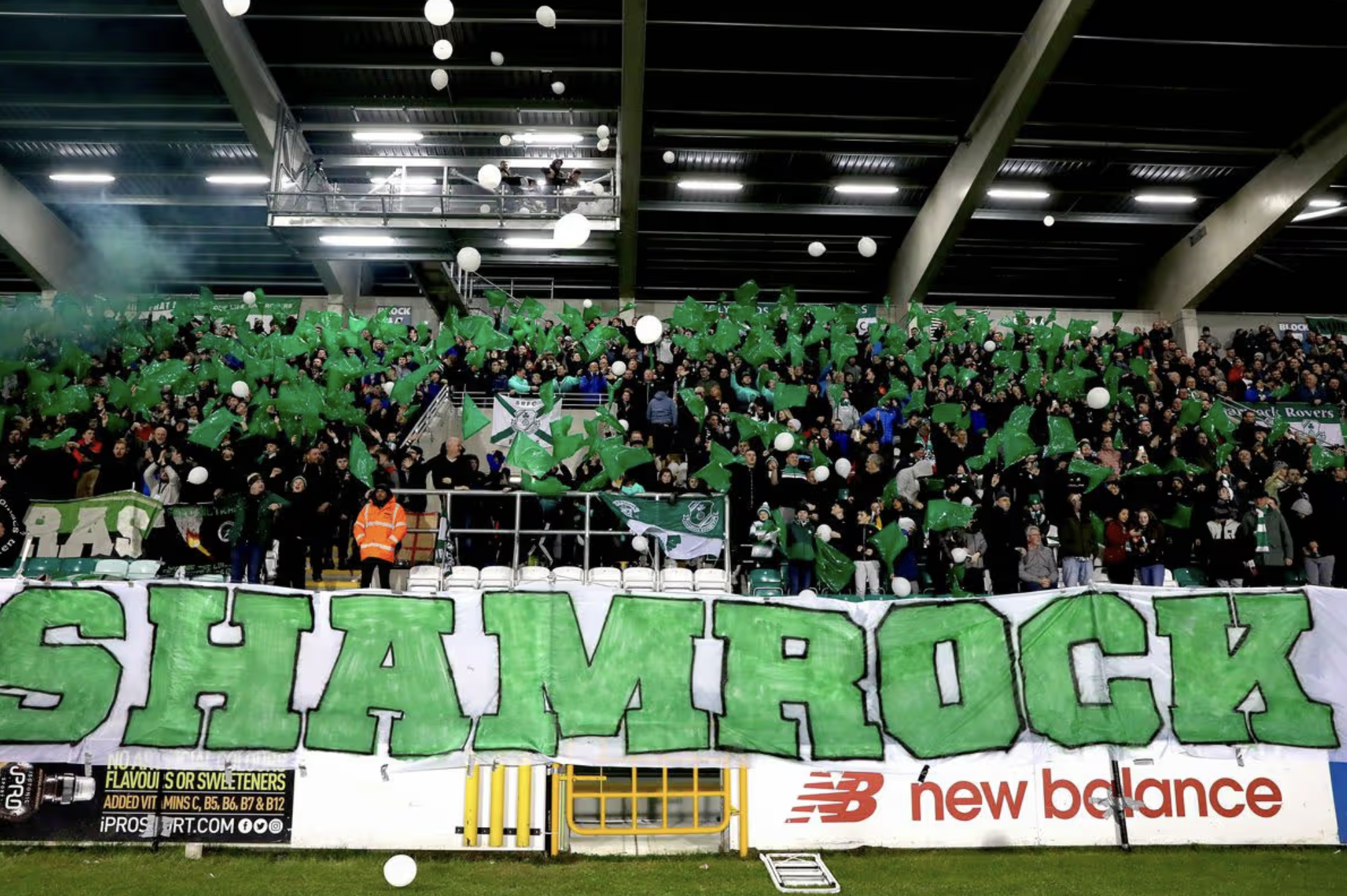
Ireland has seen a cultural revolution regarding music, language, and identity. A quieter transformation has taken place in the background. Once forgotten, now the League of Ireland experiences packed crowds, filled with young fans, fan culture, flags, and flares.
The once-forgotten league, where Irish fans across the country would sooner go into their local sports shop to purchase the red of Liverpool or Manchester United, has since begun to boom financially.
The League of Ireland has recently seen renewed and sustained interest. With record-breaking attendances at the landmark opening match of last season between Bohs and Shamrock Rovers.
Alongside, the improved performances of Irish teams in Europe have led to consistent qualification for the Conference League.
The League's financial improvements have coincided with increases in television viewership and attendance.
With this rise in mind, what are some of the root causes of the growth of the League of Ireland, and can it maintain its rise?
Fatigue of “the World’s Greatest League”
The Premier League is home to many clubs that Irish people have taken to over the years. For many Irish people, the Big Six see huge droves of fans and fan clubs alike across the Emerald Isle.
With the corporate nature of football, prices have grown exponentially. Not only have ticket prices risen for Irish hopefuls to partake in football tourism, but prices have also risen with subscription and TV prices.
Tickets have grown to unaffordable levels even for locals in the UK. For example, there has been an outcry over clubs outpricing their faithful fans over the last couple of years.
Key reminders of the visual protests from West Ham or Spurs with the black balloon protests immediately spring to mind.
Where the fans took to throwing black balloons on the pitch to protest the club’s attempt to remove concession prices for tickets.
While TV subscriptions have risen due to the number of games televised increasing. The average viewer would have to have Sky Sports, Prime and BT Sport to watch every possible game available on television.
Evaluating this and the current quality of the League, where the game has become hyper-fixated on set-pieces and controversy surrounding officiating and VAR has also contributed to the shift in interest in the country.
Culture and Community
Increased coverage of the League has demonstrated the fan culture that is available to prospective fans.
More televised games have illustrated the colourful flares, ultra-culture and fashion that the league has had to offer and thus, enticed viewers to experience match days.
Likewise, in the eyes of the general public, nothing is preferable to wearing a trendy jersey to a festival.
Excessive amounts of Bohemian jerseys have been worn and have even graced international celebrities such as Greta Thunberg.
Factors like these have aided the growth of the League, where the community aspect once experienced is helping to enable Irish fans to put away their English football kit and pick up a kit of a team from Letterkenny or Phibsborough.
Moreover, a huge criticism of fans not supporting their local situates itself in the community aspect.
Local fans are the first to scream and deplore “glory hunters”, where they ensure people that they cannot possibly enjoy football as much as they do due to not being in the locality and community.
While perhaps a bit exaggerated, it may have some truth. The average Irish fan is far more likely to find themselves relating to the history of a team close to them, while being able to work attending games into their schedule as a ritual.
This could depict why Irish fans are more likely than ever to proclaim their Irish team, where community is huge.
Think of the likes of the GAA, where I, a Laois man, wouldn’t dare claim to be a Dub in hopes of seeing an All-Ireland in my lifetime.
This logic, while slightly altered through the lens of football, could increase the interest in the League if more people were to adopt it.
Success at the European Level
As the clubs improve their performances in the European continental tournaments, this will only serve to enhance the chances of making new fans.
Fans are generally more likely to attend games if there is a chance to see a global football name on the pitch. Consider the Shelbourne and Crystal Palace.
The average Irishman was rarely able to get the chance to see a Premier League outfit with highly touted players compete in Drumcondra.
Now the average fan can get that chance. They get the chance to see Irish Teams compete at one of the premier competitions, which will only happen to boost interest in the League while increasing revenue if success continues at the rate over the last two years.
Can it be sustained?
The rise in interest in the league has resulted in a lucrative TV deal with Virgin and its own subscription model in LOI TV. However, it might not be time to call complete and total victory for the success of the League.
The infrastructure in the league remains extremely poor in comparison to countries of similar financial stature to Ireland. This can be noted with the poor quality of stadiums, too. Where this can likely result in teams looking to update their stadiums to align the quality of the stadium to modern standard risk the chance of eliminating what makes the league unique.
Finally, being beside the UK poses a threat, considering the poor wages on offer in the Republic, in contrast to the financial juggernauts of the Premier League. Young Irish talent bred in the Irish system has started to emerge as a growing trend.
Mason Melia, Jake O’Brien and Evan Ferguson are just a few names who, at a young age, decided to trade the League of Ireland for the world-class facilities and training of England. There is a further incentive for UK teams to deploy scouts to Ireland, where players are not required to get a work permit and can be counted as homegrown if they are at the club for three seasons and signed before 21.
These are some of the threats that the league faces. However, one thing is certain. Where once the stands of the League of Ireland saw empty seats and English jerseys, it now sees passionate fans and a growing culture in the heart of Ireland.
