

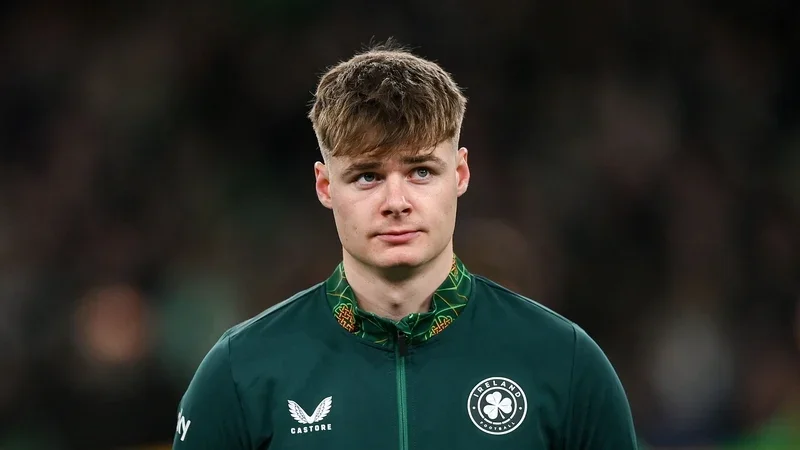
Golden Generation?
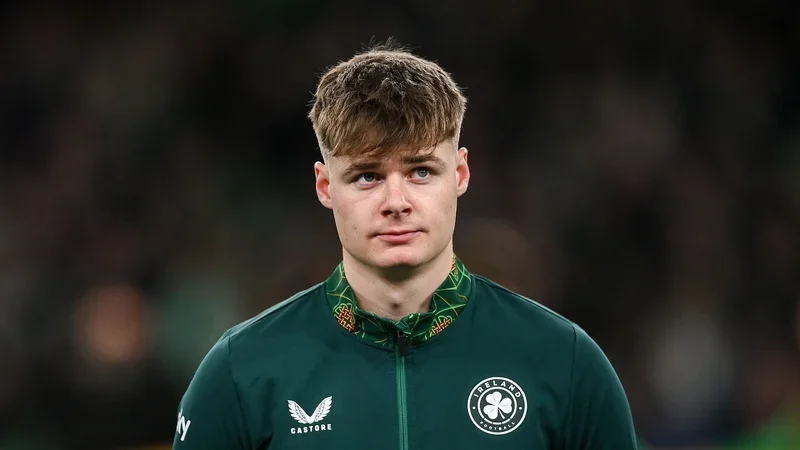
Credit: RTÉ
Maybe We Should Temper Expectations
With a batch of exciting young talent going across the continent from the island, many fans are starting to become excited for the up-and-coming generation of footballers. Considering many players have been linked to some of the biggest sides in the UK, many might want to start heralding this as a “golden generation”. However, should we temper expectations slightly?
After the failure to reach the World Cup was confirmed by the heart-wrenching loss to Czechia, Ireland had already scheduled friendlies in hopes of warm-up matches before the North American World Cup was due to kick off in June.
Ties were confirmed against Grenada, Qatar, and Canada, with the team selections set to be interesting.
Would Heimir call up the U21 and lower best performers, or would he be set to continue to have his team gel, considering the team will now be set to look towards European qualification for an event on home soil?
The Next Generation
Thankfully, Heimir would inevitably decide to call up some prospects for the Irish National Team. Some including Umeh, Melia, Rory Finneran, among many others.
Covered at length, Umeh looks to be one of the strongest emerging prospects for the Irish National Team, where the wing depth has often looked thin, and Azaz, a natural 10, has had to cover when the set-up switched to a 5-2-3.
Umeh has impressed for the underage groups of Ireland and Benfica. Hopefully, the former Cork City player can become a regular fixture in the Portuguese League. His journey to this point can be read here!
Melia, now a Spurs player, may look to kickstart his Spurs career in the coming season off the back of a difficult season for the North London outfit, with relegation narrowly avoided on the final day.
Melia made his senior debut, where he played 20+ minutes as a substitute against World Cup hosts Canada. While not a massive amount of experience was gained, it will prove to serve the prospect well in gaining experience in the camp.
Much is to be seen with how Melia’s Spurs career could turn out, with obvious parallels to be drawn from the current talisman for Ireland, Troy Parrott’s career.
Rory Finneran, the youngest player to ever play for Blackburn Rovers at the age of 15. The young midfielder would soon take his talents to the Newcastle academy.
A player profile that the Boys in Green are becoming increasingly in desperate for where the midfield depth has looking troubling.
Finneran possesses an impressive ability to read opposition passing lanes and a progressive passing range, which might be the solution for the Boys in Green.
Finneran will need to solidify his professional career by going on loan or gaining minutes in the senior team before he can become a mainstay in the National Team.
Expectations
Discussing the players mentioned, one thing becomes clear: these players are human and that they are young. Before piling on expectations that they will lead us to the World Cup again, we must recall how expectations have led to disappointment before.
Evan Ferguson, who last year had a good yet frustrating season at Roma, where playing time proved to be more limited than expected, would have performances with increased confidence despite the criticism from Gasperini.
First thought of as a perfect fit, where the former Atalanta coach’s history of transforming strikers’ careers was noted. Soon became a thing of nightmares as Gasperini would begin to criticise the striker who was once linked with Manchester United.
Ferguson has long suffered extensive periods on the sideline, especially with his ankle, which might be a consistent problem for the still young striker.
With this all in mind, Evan Ferguson is still only twenty-one years old with his whole career ahead of him. Upon his breakout season under De Zerbi, many declared that we finally had an Irish Wonderkid.
Immediately given the number 9 for Ireland, and links to teams where Brighton declared he would not be sold for under £100 million.
All of this spotlight for a kid must be dizzying, where the expectations of a dormant football-mad country certainly pile up on this too.
I think it must be understood that anything could happen for these players, whether it’s injuries or just unfairly placed huge expectations.
While it is true that Ireland possesses a strong group of young talent, it can be easy to become excited about. Two things can be true at once.
Luck, injuries, and many other factors play into how these players’ careers can be shaped. So, rather than add further detriment and expectations, we should allow these players to play and hopefully, the holy grail of a World Cup campaign will come.
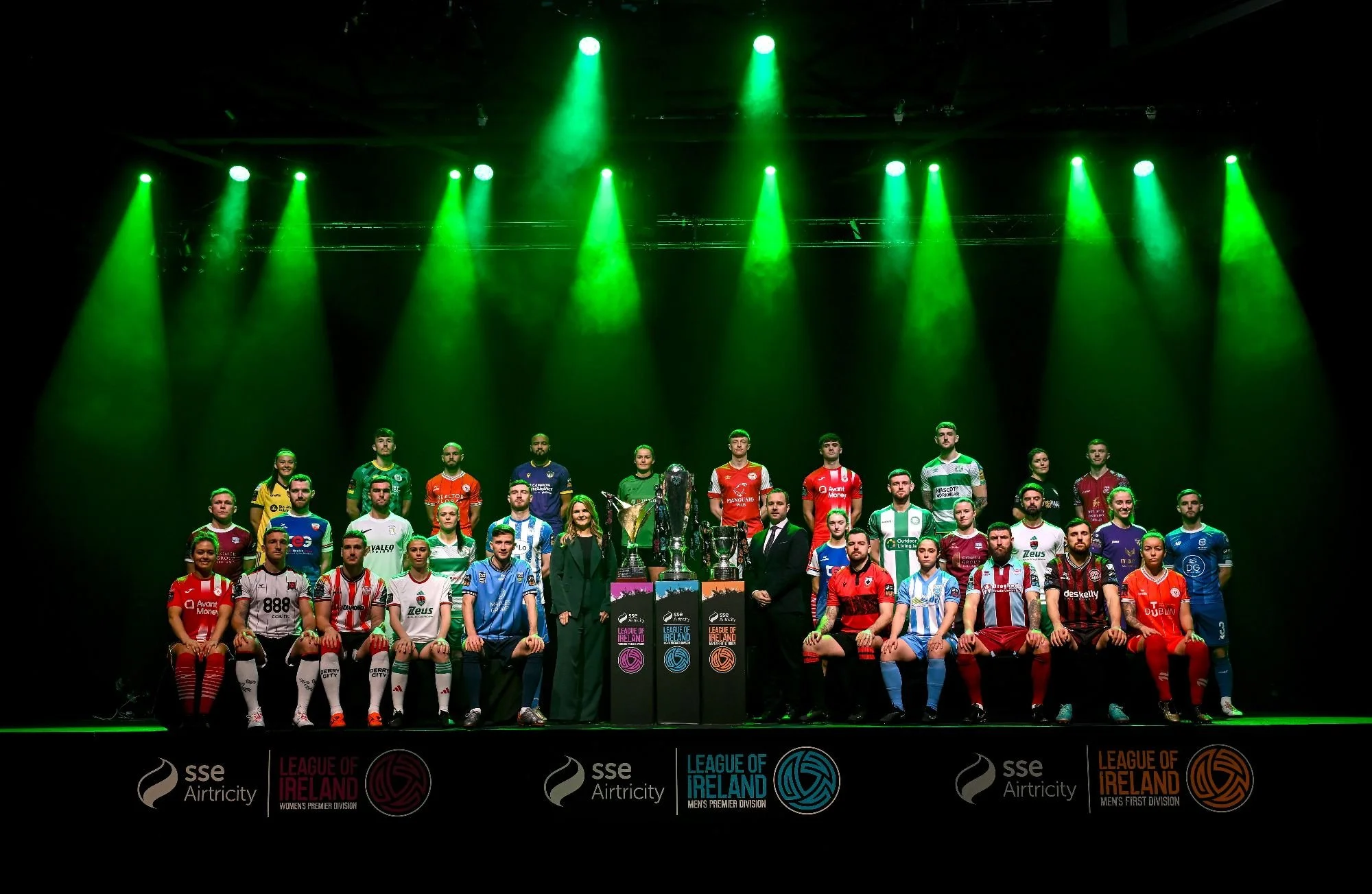
The League of Ireland: Irish Football fans finally look home
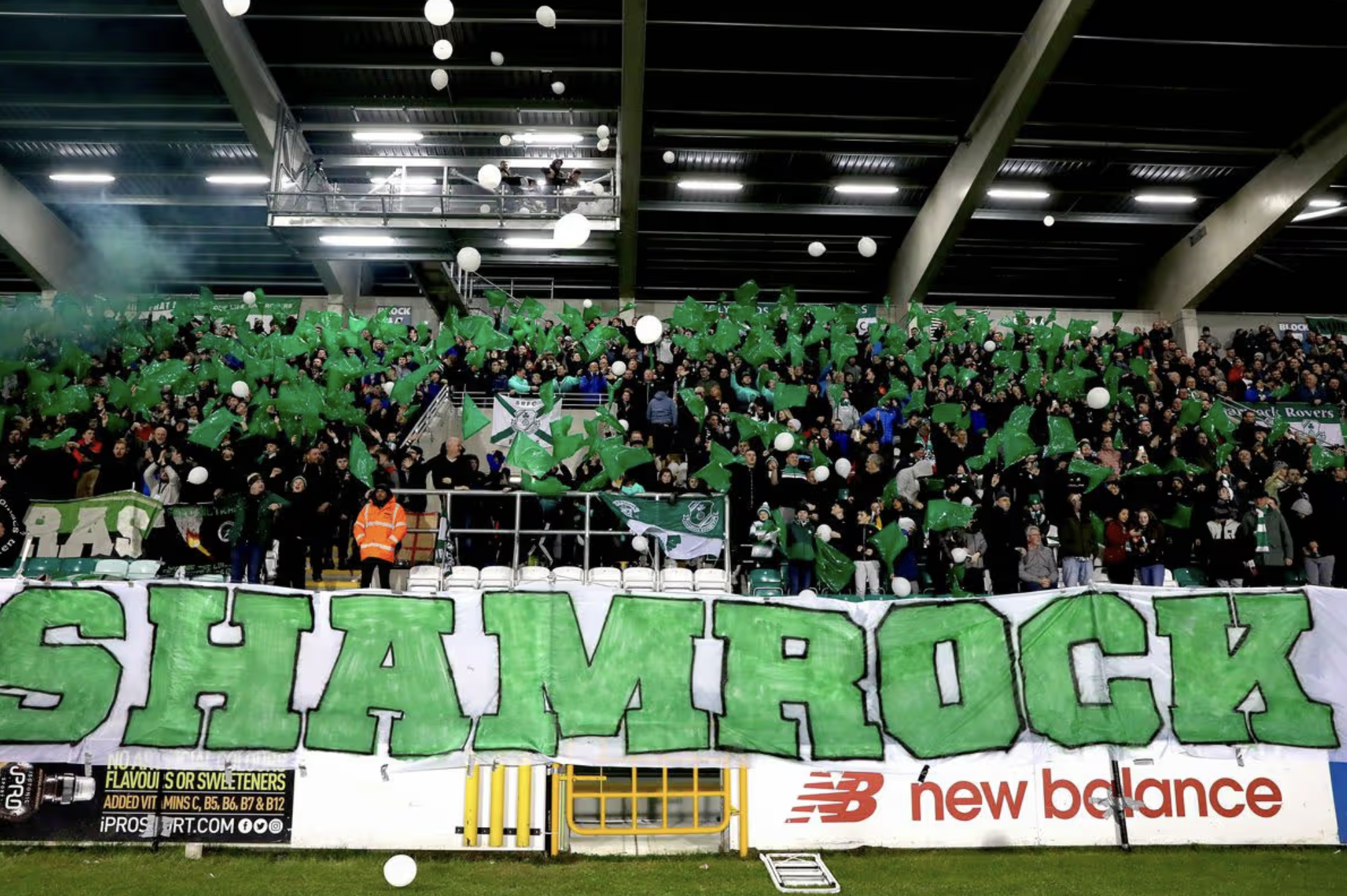
Credit - Irish Mirror
Ireland has seen a cultural revolution regarding music, language, and identity. A quieter transformation has taken place in the background. Once forgotten, now the League of Ireland experiences packed crowds, filled with young fans, fan culture, flags, and flares.
The once-forgotten league, where Irish fans across the country would sooner go into their local sports shop to purchase the red of Liverpool or Manchester United, has since begun to boom financially.
The League of Ireland has recently seen renewed and sustained interest. With record-breaking attendances at the landmark opening match of last season between Bohs and Shamrock Rovers.
Alongside, the improved performances of Irish teams in Europe have led to consistent qualification for the Conference League.
The League's financial improvements have coincided with increases in television viewership and attendance.
With this rise in mind, what are some of the root causes of the growth of the League of Ireland, and can it maintain its rise?
Fatigue of “the World’s Greatest League”
The Premier League is home to many clubs that Irish people have taken to over the years. For many Irish people, the Big Six see huge droves of fans and fan clubs alike across the Emerald Isle.
With the corporate nature of football, prices have grown exponentially. Not only have ticket prices risen for Irish hopefuls to partake in football tourism, but prices have also risen with subscription and TV prices.
Tickets have grown to unaffordable levels even for locals in the UK. For example, there has been an outcry over clubs outpricing their faithful fans over the last couple of years.
Key reminders of the visual protests from West Ham or Spurs with the black balloon protests immediately spring to mind.
Where the fans took to throwing black balloons on the pitch to protest the club’s attempt to remove concession prices for tickets.
While TV subscriptions have risen due to the number of games televised increasing. The average viewer would have to have Sky Sports, Prime and BT Sport to watch every possible game available on television.
Evaluating this and the current quality of the League, where the game has become hyper-fixated on set-pieces and controversy surrounding officiating and VAR has also contributed to the shift in interest in the country.
Culture and Community
Increased coverage of the League has demonstrated the fan culture that is available to prospective fans.
More televised games have illustrated the colourful flares, ultra-culture and fashion that the league has had to offer and thus, enticed viewers to experience match days.
Likewise, in the eyes of the general public, nothing is preferable to wearing a trendy jersey to a festival.
Excessive amounts of Bohemian jerseys have been worn and have even graced international celebrities such as Greta Thunberg.
Factors like these have aided the growth of the League, where the community aspect once experienced is helping to enable Irish fans to put away their English football kit and pick up a kit of a team from Letterkenny or Phibsborough.
Moreover, a huge criticism of fans not supporting their local situates itself in the community aspect.
Local fans are the first to scream and deplore “glory hunters”, where they ensure people that they cannot possibly enjoy football as much as they do due to not being in the locality and community.
While perhaps a bit exaggerated, it may have some truth. The average Irish fan is far more likely to find themselves relating to the history of a team close to them, while being able to work attending games into their schedule as a ritual.
This could depict why Irish fans are more likely than ever to proclaim their Irish team, where community is huge.
Think of the likes of the GAA, where I, a Laois man, wouldn’t dare claim to be a Dub in hopes of seeing an All-Ireland in my lifetime.
This logic, while slightly altered through the lens of football, could increase the interest in the League if more people were to adopt it.
Success at the European Level
As the clubs improve their performances in the European continental tournaments, this will only serve to enhance the chances of making new fans.
Fans are generally more likely to attend games if there is a chance to see a global football name on the pitch. Consider the Shelbourne and Crystal Palace.
The average Irishman was rarely able to get the chance to see a Premier League outfit with highly touted players compete in Drumcondra.
Now the average fan can get that chance. They get the chance to see Irish Teams compete at one of the premier competitions, which will only happen to boost interest in the League while increasing revenue if success continues at the rate over the last two years.
Can it be sustained?
The rise in interest in the league has resulted in a lucrative TV deal with Virgin and its own subscription model in LOI TV. However, it might not be time to call complete and total victory for the success of the League.
The infrastructure in the league remains extremely poor in comparison to countries of similar financial stature to Ireland. This can be noted with the poor quality of stadiums, too. Where this can likely result in teams looking to update their stadiums to align the quality of the stadium to modern standard risk the chance of eliminating what makes the league unique.
Finally, being beside the UK poses a threat, considering the poor wages on offer in the Republic, in contrast to the financial juggernauts of the Premier League. Young Irish talent bred in the Irish system has started to emerge as a growing trend.
Mason Melia, Jake O’Brien and Evan Ferguson are just a few names who, at a young age, decided to trade the League of Ireland for the world-class facilities and training of England. There is a further incentive for UK teams to deploy scouts to Ireland, where players are not required to get a work permit and can be counted as homegrown if they are at the club for three seasons and signed before 21.
These are some of the threats that the league faces. However, one thing is certain. Where once the stands of the League of Ireland saw empty seats and English jerseys, it now sees passionate fans and a growing culture in the heart of Ireland.
Ireland’s Identity Crisis: Ireland v Israel
Credit - Reuters
More Than a Sport
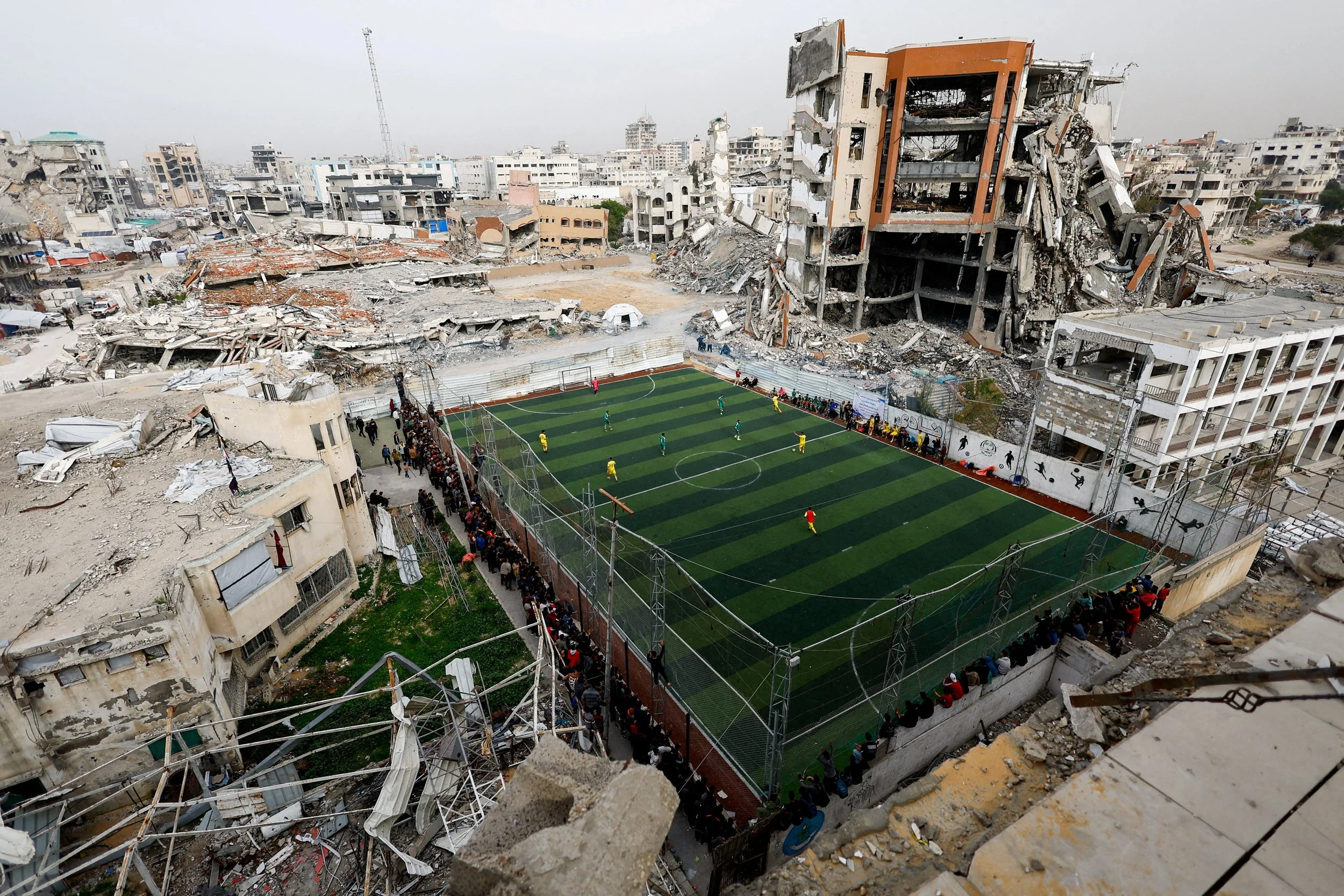
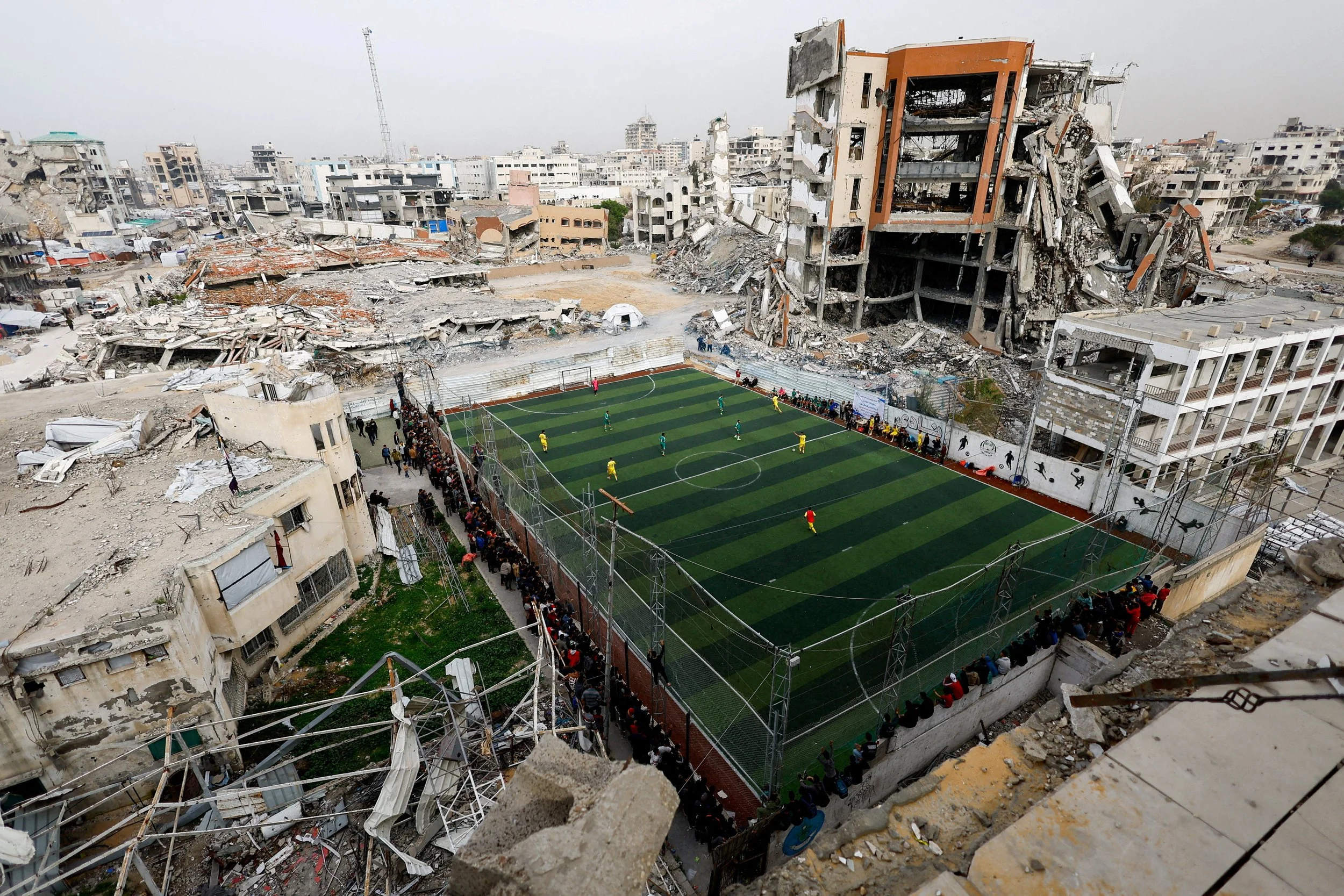
As the cries rang out, Ireland agonisingly failed to qualify for a Major Tournament for the fourth tournament in a row. An existential match began to come to the forefront for Ireland. Drawn against Israel, Ireland’s past of colonial struggle, independence, and parallels with Palestine were about to come head-to-head with the sporting realm.
On the Twelfth of February, Ireland was drawn into a Nations League group to play against Kosovo, Austria and crucially, Israel. Much had been made of the tumultuous relationship between Israel and Ireland. Immediately after the draw had concluded, the reaction was already fiery in response. Initial and quick calls for the National Team to decline to play the match commenced.
Consistently, whenever issues like this arise in football (or any sport for that matter), many clamour to “keep politics out of football”. In reality, this is much harder to do. Thus, it is undestandable to pose if it is possible to keep politics out of football
Whereas Israel has continued to play while it continues its ethnic cleansing of Gaza, other countries, such as Russia, have been banned from playing in continental tournaments, and similarly, their domestic teams have received the same treatment.
This is appropriate because consider if Russia and Ukraine played each other in a match. This can only display that it is not simply that, a match. It can become a cultural moment, or it can result in huge clashes.
While not on the same level as a Russia v Ukraine match or a match between Israel and Palestine themselves. The situation surrounding the Ireland and Israel game is massively important to understand.
Ireland and Israel Relations
Set in stone with the Balfour declaration in the UK in 1917, the Zionist project was set to go to Palestine and establish itself with the help of the UK. This is where the UK would redeploy the Black and Tans to “Mandatory Palestine”
This is just one of the obvious links as to why Ireland feels so strongly about the conflict as a whole. Further observations can be illustrated with the feeling of a cultural erasure of a homeland.
Ireland has similarly been one of the leaders in the Western world for the recognition of Palestine alongside Spain and Norway under the initial 1967 borders set before the ethnic cleansing of Palestinian land.
The Players and Match Base
Whether this match should go ahead beyond the historical significance of it should also consider the players, the fan base, and the general pr nightmare this match could potentially bring.
This match could certainly bring massive amounts of media spotlight with the scale of the tie, not on a competitive basis, but on a cultural one. The atmosphere at the Aviva will be tense should the fixture go ahead. This could lead to heightened clashes between the fans or the players on the pitch.
The players have been forced into an unwinnable fixture where the morality of the occasion will continuously be questioned, and the attendance could be stunningly low. Furthermore, there could be a flag policy put into action if Ireland were to get a considerable fine with Palestine flags flown from corner to corner.
Finally, if the match is to be played with huge boos to the Israeli anthem, the Israeli players and if a scuffle were to ensue on the pitch. Ireland has already unfairly gained the moniker as the “most antisemitic country in Europe” by Israeli officials, despite being one of the few to not have a state-sponsored persecution of Jewish people.
This match could provide evidence and depict Ireland in a bad light if it were to go ahead. Similarly, a player who potentially could play his first cap or his last cap could have his career marred with accusations of antisemitism. Realistically, the match in itself presents Ireland in a highly volatile situation where the actions on the pitch will not be the key discussion points.
Reactions
Considering the prospective animosity with the ongoing protests in Ireland and abroad, there has been an outcry among former professionals, too.
On the 7th of May, leading Irish footballers have sent an open letter labelled Stop the Game. Irish football personalities such as Brian Kerr and Irish women’s player Louise Quinn and Irish artists such as Kneecap and Fontaines D.C have taken to protest the match.
With pressure building, the FAI will have to determine whether playing the game will be worth it with all the noise surrounding the two ninety-minute affairs.
With 180 minutes of football to commence, a summer of noise and speculation will surround the game and the FAI will have to conclusively decide on the path it will take for the National Team. Will the game be played, or will it be the first step towards evaluating Israel’s place in UEFA.