

The Irish Manager Revolution – Andrews, Barry and Hourihane.
Credit - The Southern Star
After years of not having established Irish coaches in the top three divisions of English Football, Irish coaches have seen several coaches who look to confirm their status in the managerial game.
The Old Way
The identity of Irish coaches has shifted. Where once celebrated managers, namely McCarthy and O’Neill, were at the pinnacle of Irish coaching.
The identity of Irish managers has changed. O’Neill and McCarthy were man-managers who were intent on a highly pragmatic system.
Now, Irish managers are being depicted as forward-thinking, indicating a shift in how the great Irish thinkers in football have adapted.
Killer Keith
Furthering his good start, which followed a summer of sustained scrutiny, Andrews has seen his side push to qualify for Europe this year.
Andrews has transformed his side into one of the deadliest counter-attacking sides in a season where that has grown in popularity.
Andrews has proved a lot of detractors wrong so far, as many Premier League fans bet on them to go down or for him to be firmly in the sack race.
Andrews has seemingly displayed impressive versatility and knowledge in the game, alongside striking man-management skills.
Andrews will hope to build upon a stellar first season. More can be read on Andrews’ first season here.
Hourihane and Murphy’s campaigns
While much of the focus has been directed at Keith Andrews, a quiet breath of success has occurred in League One this season.
Where Hourihane and Murphy have displayed a great ability in the managerial game for a long time to come.
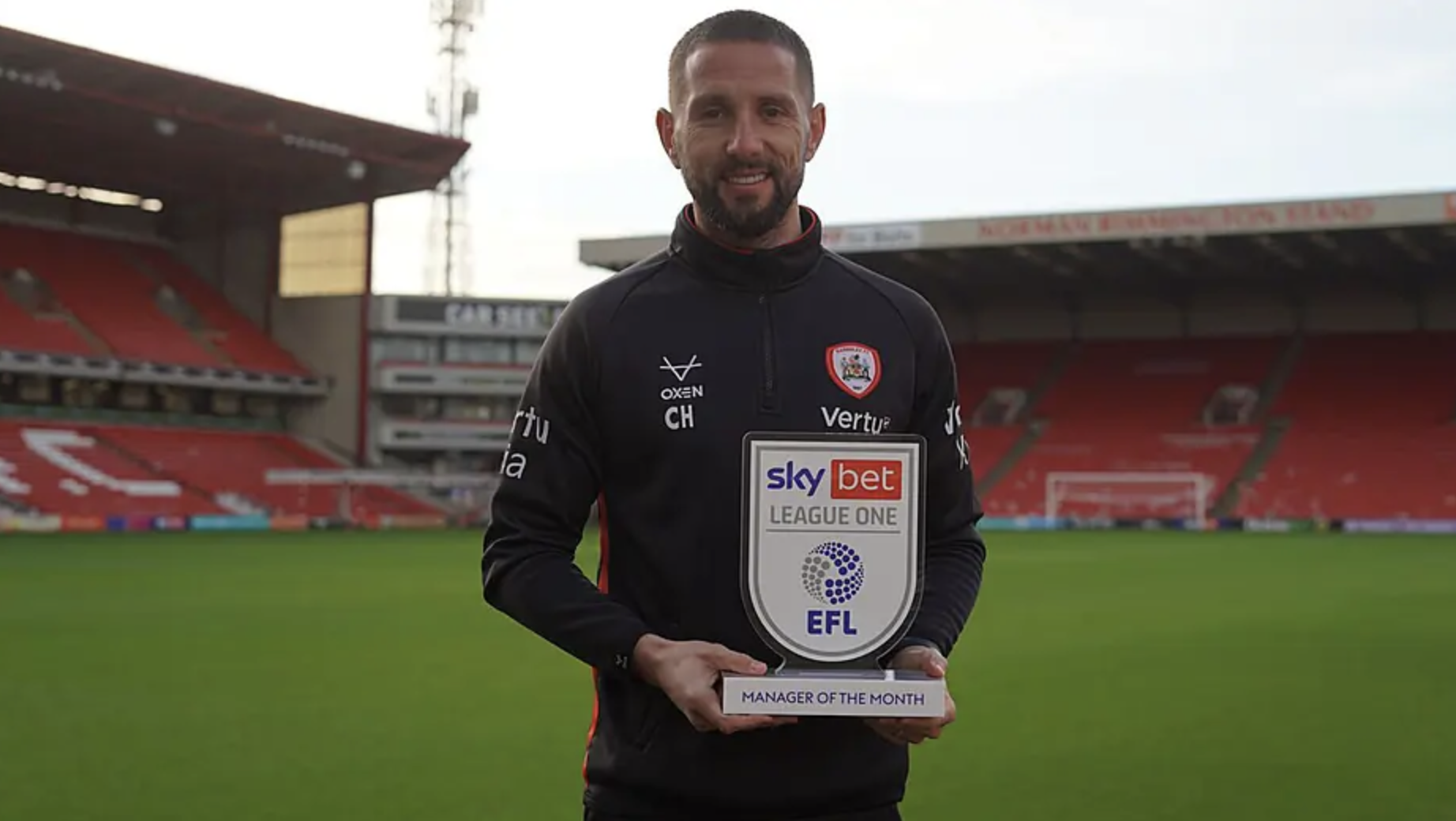
Hourihane has been the manager of Barnsley, who have challenged for the playoff positions up until a poor string of results in December, where their form has since dipped immensely as the Yorkshire club sees itself closer to relegation.
Many fans note his importance to the team and blame the poor form on the recruitment structure at the club.
Hourihane has displayed a clear identity in his tactical structure at Barnsley.
He took the ditch, the previously favoured 5-at-the-back at Barnsley. Favouring a traditional four at the back, with fullbacks in a 4-2-3-1.
The 4-2-3-1 in question sees the Barnsley team press high, which matches the zeitgeist of modern football.
Not intent on pigeon-holing himself into a style of play, he has similarly assessed the quality of teams he’s facing and adapted the team to deploy possession-based or counter-attacking football depending on what is needed.
Despite the praise for Conor Hourihane among the fanbase, he has decided to step down at the end of the season.
Where fans have responded, saying they would rather sack the board as a response to the mishandling of recruitment than to Hourihane’s announcement of leave.
It will be interesting to see what steps Hourihane takes in his coaching journey.
Meanwhile, Brian Barry-Murphy has led Cardiff to promotion and an impressive 91 points in League One.
Barry-Murphy found his name in coaching as a development coach at Manchester City and has finally followed this up by being named a first-team coach at the start of the 25/26 campaign.
Murphy’s experience in a club that employs Guardiola is very evident. His teams are noted for their high-pressing off ball.
Likewise, they draw parallels with Man City’s style of play, with high amounts of possession and a preference for control, opposed to chaos.
More similarities can be drawn; the fluid positional play and build-up phase are very reminiscent of the best aspects of Man City’s playstyle.
In possession, Barry-Murphy plays a forward-thinking 4-4-2 and has a similar shape in defence with an increasingly popular mid-block 4-4-2.
Barry-Murphy will be able to show his tactical nous in the Championship, where his style will be tested in the hardest league in the world.
With these three having success so far in England, hopefully, it can inspire like-minded Irish minds to thrust themselves into the Irish game and continue to evolve the imagery of what it means to be an Irish manager.
These managers display the developing trend in how the game is seen among Irish minds.
Where once they displayed pragmatism and dinosaur tactics, now Irish managers can see themselves as forward-thinking and progressive while harnessing the ideas of their predecessors
