

Why Ireland’s Prague Exit felt Nothing Like Denmark
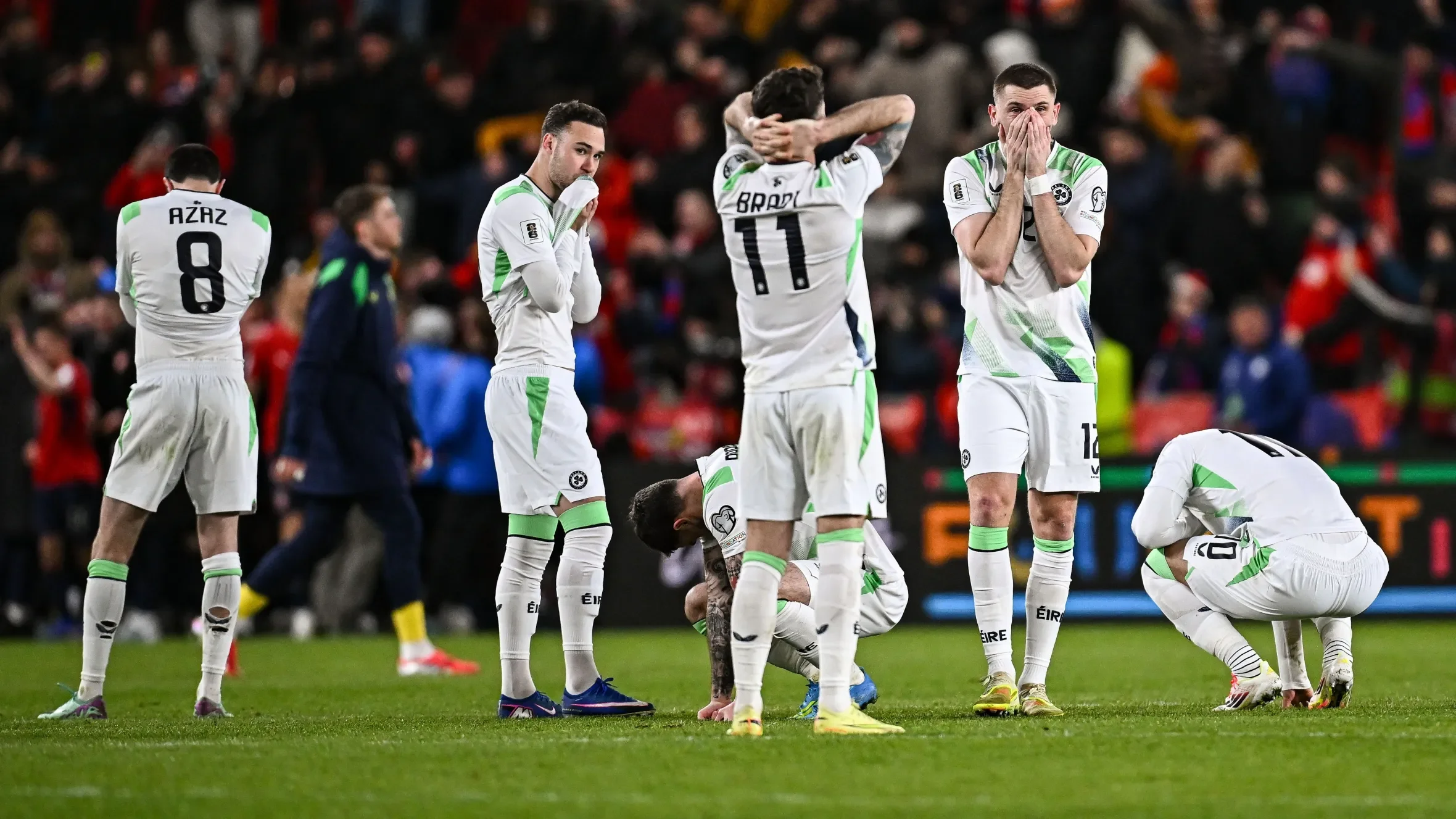
Credit - The Irish Times
Coming into the big play-off home leg vs Denmark, the Irish starting XI was in solid club form across the English leagues, with several players establishing themselves as key figures for their teams and most of them being key starters for their respective clubs. All of the players in the squad plied their trade in the Premier League and the EFL Championship.
Starting in goal, Darren Randolph had become an instant fan-favourite at Championship side Middlesbrough. He had just joined them in the previous summer from West Ham, for whom he had been a consistent performer in the previous season despite often playing as the back-up keeper.
He had started 16 games and kept 7 clean sheets by mid-November. His club teammate Cyrus Christie played every single minute at right-back for Hull, while netting 1 goal against Fulham in September. Some Hull fans were, however, critical of the defensive aspect of his game.
The centre of defence featured Shane Duffy, who was quite literally in the form of his life for Brighton, statistically the most dominant aerial defender in the Premier League, appearing in all 11 of Brighton’s opening games.
His centre-back partner was Newcastle's Ciaran Clark, who had 1 goal in 10 starts during the Magpies' return to the English top-flight, while occasionally being a starter for them due to facing competition from Jamal Lascelles.
A core trio from high-flying Burnley, who went on to finish 7th in the league, was supposed to have provided much of the team's stability in that crucial final vs Denmark. Robbie Brady was the creative engine with 11 appearances and 2 assists.
Meanwhile, Jeff Hendrick was a key part in Sean Dyche’s Burnley side with 10 games and 1 goal (a crucial winner against Everton), and Stephen Ward, who enjoyed a career-best run at left-back, starting 11 games and scoring a stunning volley on the opening day against Chelsea.
Back at midfield, David Meyler had established himself as a leader for Hull City, captaining them several times and scoring 1 goal in 12 Championship appearances, while Harry Arter had made 9 Premier League starts.
Further forward, James McClean was a regular for West Brom with 11 appearances, often providing high-intensity energy from the bench, and finally, veteran striker Daryl Murphy touched down in Dublin in top form, having bagged 6 goals in 15 starts for Nottingham Forest.
The Look In (July-August-March 2026)
As the Boys in Green prepared for their historical trip to the Fortuna Arena in Prague, the squad arrived with significant momentum from a dramatic comeback against Hungary about four months ago. There was a mix of players who were regular starters and some who weren’t getting a lot of minutes (not necessarily due to low quality).
Starting off in goal, Caoimhin Kelleher had become an instant fan-favourite at Brentford; he had joined them from Liverpool to secure first-team football and arrived in Prague as one of Europe's top-performing keepers, boasting a 7.58 average rating (WhoScored).
His club teammate and captain, Nathan Collins, wasn’t having the best possible season at Brentford, facing a period on the sidelines before eventually working his way back into Keith Andrews’ Europe-chasing side.
The defence also featured Everton’s Jake O'Brien, who absolutely excelled in the few times that he actually played at centre-back due to being forced to play at right-back because of Everton’s lack of fit right-backs. Finally, Dara O'Shea had so far been a key player for Ipswich Town throughout their impressive top-flight return race.
Veteran leader Séamus Coleman was handed a start at right back despite not having played a single game in 2026. As per usual, he didn’t give that impression on the pitch and continued to show why he is probably the most respected player in the Premier League and amongst the Ireland setup.
At left back, Ryan Manning was enjoying a strong run for Southampton despite a relatively slow start, providing vital delivery from set-pieces, while Jack Taylor had only missed one league game for Ipswich Town from mid-October to right before the play-offs.
As for Chiedozie Ogbene, it was the complete opposite. While on loan at Sheffield United, Chris Wilder kept leaving him out of the reckoning, giving Chieo just over 40 league minutes between November’s and March’s international break and sending him to the U21s.
Also in midfield, Jayson Molumby had established himself as a leader and captain for West Brom, while Finn Azaz -despite some ups and downs- was a key creative spark for Southampton, having scored 9 times and assisting on five occasions leading up to the game.
Finally, regarding the striker position, not much needs to be said about Irish hero Troy Parrott, who was in blistering goalscoring form for AZ as well as leading Ireland's qualifying stats with 5 goals and in a way sending Ireland to the play-offs.
The humbling home defeat vs Denmark can be attributed to a good few factors, but they can be narrowed into two, really: the players ultimately not showing up and Martin O’Neill making some poor and impulsive substitutions at half-time. Despite the game starting in the best way possible for Ireland through a Shane Duffy goal set up by Robbie Brady, it all went black for Ireland then, with most of the players simply not replicating their club form.
Cyrus Christie scored an own goal, bringing the Danes back in the game and failing to contain Pione Sisto. Ciaran Clarke had a poor game and was taken off in the 71st minute for Shane Long in a desperate attempt for late goals, while Shane Duffy, despite his goal, was part of a defence that collapsed in the latter stages of the tie.
Stephan Ward had arguably the worst performance with an Ireland jersey, costing Ireland two goals. In midfield, captain David Meyler got hooked at half-time alongside Harry Arter, who played a part in Denmark’s equaliser. Jeff Hendrick struggled to create and faced a really difficult task in the second half. James McClean had a big chance to double Ireland’s advantage, while his fellow wing-back Robbie Brady provided the free-kick that led to Duffy's opening goal, but was dispossessed in the build-up to Eriksen's first strike. Lastly, Daryl Murphy was really isolated up front, barely receiving the ball to his feet. It was regarded that our best performer at night was actually Randolph, who, despite conceding five, saved the Danes from getting more.
On current Celtic manager Martin O’Neill, it all went out of control when, with Ireland trailing 2–1, he replaced the two holding midfielders (David Meyler and Harry Arter) with the attacking duo of Wes Hoolahan and Aiden McGeady.
That left a gap in Ireland’s midfield that allowed high-flying Christian Eriksen to have a field day in Dublin, effectively finishing the Boys in Green off. O’Neill also had a dispute with journalist Tony O'Donoghue, resulting in him storming out of the post-match interview.
Where did it go Wrong?
In a match where the host country -once again- held its breath, the starting XI in Prague put in a really good shift but ultimately couldn’t get a two-goal advantage over the line, eventually losing on penalties after extra time.
Firstly, Caoimhín Kelleher was solid whenever called upon. At the back, Nathan Collins was a rock, putting in a proper captain’s performance and winning aerial duels left, right and centre. He also had a superb effort come off the bar.
Jake O'Brien also did well, but gave away a few sloppy fouls showed great composure on the ball, but was caught slightly out of position for the late equaliser. Dara O’Shea had his best-ever performance in an Ireland shirt, playing a massive part in Ireland’s second goal. On a defensive basis, he consistently made important tackles, cleared the ball on multiple occasions and carried the ball forward in a very capable manner
On the flanks, Séamus Coleman rolled back the years with another superb defensive display. As per usual, he gave it all for his country in what, unfortunately, might have been his last ever competitive Ireland game.
Ryan Manning, on the other hand, had a night to forget, with the critical error of giving away a completely needless penalty that brought the hosts back into the game. In the engine room, Jayson Molumby was superb in all aspects as he hit the bar once, while Jack Taylor linked the play well in the first half but faded as the Czech midfield began to dominate possession following Thomas Soucek’s introduction in the second half.
Finn Azaz didn’t get involved enough as his night ended in devastation with a saved penalty in the shootout, and his utilisation on the left side of the pitch remains questionable, as he continuously goes missing.
Chiedozie Ogbene was Ireland's primary outlet, using his pace to win several free-kicks and also carry the ball forward. Up top, Troy Parrott was ice-cold from the penalty spot to give Ireland the lead and worked tirelessly as a lone striker, but he was ultimately left isolated as Czechia grew into the game.
However, despite both of the games sealing Ireland’s fate in the worst way possible, there is one basic contrasting sentiment among Irish fans. In a way, the Prague performance represented a "new dawn," whereas the Denmark loss felt like a "dead end." While both games ended in heartbreak, the 2026 exit is viewed through a lens of optimism.
On a personal note, I buy into that argument. Just take a look at the average squad age of the side that took on Denmark and the side that took on Czechia. Up against Denmark - 29.4 years, versus Czechia 24.8. You just get the feeling that our current crop of players is entering its prime.
Also, the nature of the performances differed big time. While the game vs Denmark was a home embarrassment, Ireland went away to Prague and scored twice inside the opening twenty-five minutes and even hit the crossbar twice. Czechia grew into the game because of a sloppy penalty, so this game could be considered a footballing accident.